
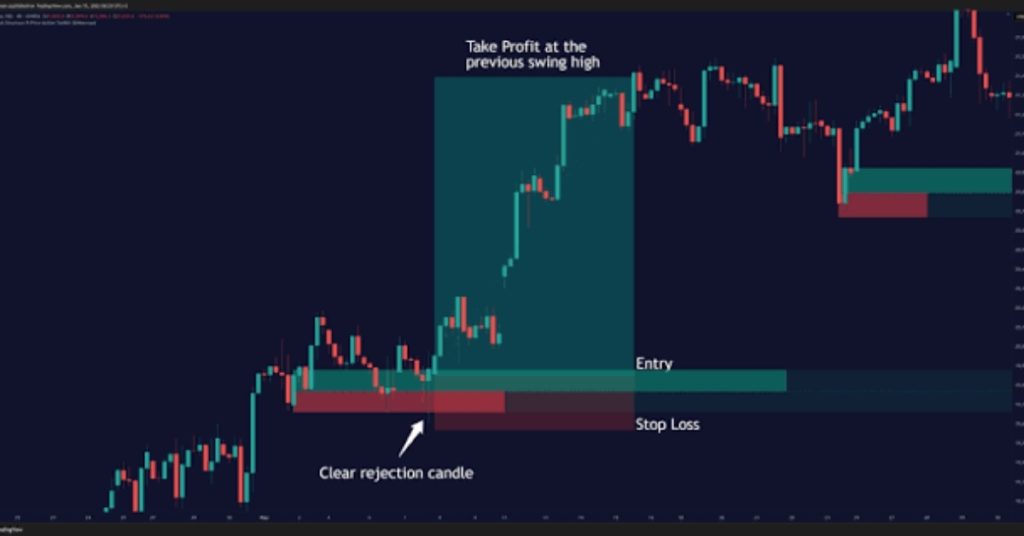
Successful forex trading is not only about predicting price direction but also about understanding where major market participants place their trades. Learning what is order block in trading helps traders identify price zones where banks, hedge funds, and other institutional traders have executed large buy or sell orders before significant market moves. These areas often become valuable support or resistance levels, offering potential entry and exit opportunities. By combining order blocks with technical analysis, candlestick chart patterns, confirmation indicators like RSI and MACD, and sound risk management, traders can improve trade accuracy and make more informed decisions. Mastering this concept provides a stronger foundation for building a disciplined and consistent trading strategy.
Quick Facts About Forex Order Blocks
| Feature | Details |
| Definition | A price zone where large institutional traders execute significant buy or sell orders. |
| Common Markets | Forex, CFD trading, stocks, indices, commodities, and cryptocurrencies. |
| Main Types | Bullish order block and bearish order block. |
| Best Confirmation Tools | Relative Strength Index (RSI), Moving Average Convergence Divergence (MACD), Bollinger Bands, trading volume, and price confirmation. |
| Best Timeframes | Daily price chart and four-hour price chart generally provide stronger signals than lower timeframes. |
| Main Participants | Banks, hedge funds, institutional traders, and retail traders. |
| Typical Trade Setup | Wait for retracement into the order block, confirm the reaction, place entry orders, set a stop-loss order, and define a take-profit target. |
| Risk Management | Use a healthy risk-to-reward ratio, proper position sizing, and avoid excessive risk exposure. |
What Is a Block Order?
A block order is a large purchase or sale of financial assets executed by institutional traders rather than individual investors. These transactions usually involve substantial amounts of capital and are commonly placed by banks, hedge funds, pension funds, insurance companies, or other financial institutions. Because executing these massive buy orders or sell orders all at once could significantly affect the market price, institutions often split them into smaller orders over time.
This execution process creates specific price zones where considerable buying or selling activity occurs. These zones frequently become areas of interest for traders because they reveal where institutions previously entered the market.
Unlike retail traders, institutional participants cannot easily enter or exit large positions in a single transaction without causing major price dynamics. Instead, they distribute their orders gradually, creating areas of market consolidation before the price eventually moves strongly in one direction.
Some common characteristics of a block order include:
- Executed by institutions managing large amounts of capital.
- Often hidden through multiple smaller transactions.
- Creates noticeable changes in market behaviour.
- Frequently appears before strong breakouts or breakdowns.
- Leaves footprints visible on price charts.
For example, suppose a major bank wants to buy a large position in the EUR/USD currency pair. Purchasing billions of euros immediately would drive the market price sharply upward. Instead, the bank accumulates its position over time within a relatively narrow consolidation zone. Once enough liquidity becomes available and the buying process is complete, the market often experiences a strong upward move.
The opposite scenario occurs when institutions distribute large sell orders. This can create selling pressure that eventually leads to a bearish trend after the accumulation phase ends.
Understanding block orders helps traders interpret institutional activity instead of simply reacting to price movements. Rather than chasing breakouts after they occur, traders can anticipate areas where professional market participants may become active again.
What’s an Order Block in Forex Trading?
A forex order block is a specific area on a price chart where institutional traders previously accumulated significant buy orders or sell orders before causing a major market movement. Unlike a simple support or resistance level, an order block represents the final consolidation area before a strong directional move begins.
These zones are important because institutions often revisit unfinished positions or defend previously established entries. As a result, price frequently reacts when it returns to these levels, creating opportunities for traders looking to enter a long position or short position.
There are two main categories of order blocks:
| Type | Description | Typical Market Reaction |
| Bullish Order Block | Formed before a strong upward move after institutional buying. | Potential bullish reversal and buying opportunities. |
| Bearish Order Block | Formed before a strong downward move after institutional selling. | Potential bearish trend continuation or selling opportunities. |
Order blocks differ from ordinary support levels and resistance levels because they focus on institutional activity rather than historical price reactions alone. Traders use technical analysis to identify these areas by examining:
- Candlestick chart patterns
- Bullish engulfing candle formations
- Bearish engulfing candle formations
- Trading volume
- Market consolidation
- Breakouts
- Breakdowns
- Price confirmation
For instance, imagine the GBP/USD daily price chart trading sideways for several sessions. During this period, institutional traders quietly build positions while retail traders see only a consolidation zone. Eventually, a large bullish engulfing candle breaks above resistance with increasing trading volume. This breakout may indicate that institutions have completed their accumulation process, leaving behind a bullish order block.
Later, when price retraces into that same zone, many traders watch for confirmation before opening new entry orders.
Although order blocks can appear on almost every timeframe, many experienced traders consider the daily price chart and four-hour price chart more reliable because they contain less market noise than lower timeframes. Lower timeframes may generate more false signals due to short-term volatility and lower-quality price movements.
Understanding forex order blocks allows traders to better interpret market trends, recognize institutional footprints, and develop structured trading strategies instead of relying solely on indicators. When combined with tools such as the Relative Strength Index (RSI), Moving Average Convergence Divergence (MACD), Bollinger Bands, and sound fundamental analysis, order blocks become a valuable component of professional trade planning across major currency pairs and other liquid markets.
Why Are Order Blocks Important?
Order blocks are important because they reveal areas where large institutional traders have previously entered the market. Since banks and hedge funds often control significant trading volume, their activity can influence future market behaviour when price revisits these zones. Instead of relying only on traditional support levels or resistance levels, traders use order blocks to understand the intentions behind major price movements.
One of the biggest advantages of order blocks is that they provide insight into institutional activity rather than retail sentiment. This helps traders identify higher-probability entry points based on where professional market participants may defend their positions.
Order blocks also improve trade planning by helping traders:
- Identify high-probability entry points.
- Confirm potential bullish reversal or bearish trend setups.
- Reduce risk exposure through better stop-loss order placement.
- Improve the overall risk-to-reward ratio.
- Filter false signals caused by short-term market noise.
- Understand price dynamics during different market conditions.
However, order blocks should never be used in isolation. Combining them with technical analysis, economic data, economic announcements, market trends, and confirmation indicators such as RSI, MACD, or Bollinger Bands increases their reliability.
Successful traders also consider timeframe dependency, as higher timeframes generally produce stronger order block signals than lower charts affected by volatility risk and market unpredictability.
What Are the Different Types of Order Blocks?
Understanding the different types of order blocks helps traders determine whether institutions are likely accumulating buying positions or distributing selling positions. Although order blocks can appear in many forms across different markets, they generally fall into two main categories: bullish order blocks and bearish order blocks. Each type reflects a different stage of institutional activity and offers unique trading opportunities.
Rather than treating every consolidation zone as an order block, traders should look for clear evidence of strong momentum, market structure shifts, and price confirmation after the initial move. This improves trade accuracy and reduces the chances of acting on false signals.
Bullish Order Block
A bullish order block forms when institutional traders accumulate large buy orders before driving the market upward. It usually appears near the end of a downward movement or during a period of market consolidation before a significant bullish reversal.
This area often becomes an important support zone because institutions may defend their previous buying positions if the market retraces.
Common characteristics of a bullish order block include:
- Appears before a strong upward breakout.
- Forms after a consolidation zone or accumulation phase.
- Often followed by a bullish engulfing candle.
- Trading volume may increase during the breakout.
- Frequently serves as a future support level.
- Offers opportunities to open a long position after confirmation.
For example, imagine the EUR/USD pair declining steadily before entering a narrow trading range. After several sessions, price breaks higher with a large bullish engulfing candle and strong momentum. The final bearish candle before that breakout often marks the bullish order block. If price later retraces into this zone and buyers return, traders may consider placing entry orders after additional confirmation.
Bearish Order Block
A bearish order block represents the opposite market condition. It forms when institutional traders distribute significant sell orders before initiating a sharp downward move. These zones frequently become future resistance levels where sellers may re-enter the market.
A bearish order block often develops after an extended rally or during a consolidation phase before a strong bearish trend begins.
Read More : What Is Paper Trading? Meaning, Benefits & How It Works
Typical characteristics include:
- Forms before a powerful downward breakdown.
- Appears after institutional selling activity.
- Usually followed by a bearish engulfing candle.
- Acts as future resistance levels.
- May provide opportunities for opening a short position.
- Often confirmed by increasing selling pressure and market momentum.
Suppose GBP/USD rises steadily before moving sideways for several candles. Institutions quietly distribute positions during this consolidation period. Once enough liquidity enters the market, price breaks below support with strong bearish momentum. When the market later retraces into that previous consolidation area, many traders monitor the bearish order block for potential selling opportunities.
Comparing Bullish and Bearish Order Blocks
The following table highlights the key differences between the two types of order blocks.
| Feature | Bullish Order Block | Bearish Order Block |
| Institutional Activity | Buying | Selling |
| Expected Direction | Upward movement | Downward movement |
| Trading Bias | Long position | Short position |
| Typical Formation | Before bullish reversal | Before bearish trend |
| Future Role | Support level | Resistance level |
| Confirmation Signal | Bullish engulfing candle | Bearish engulfing candle |
How Can I Identify an Order Block?
Identifying an order block requires more than spotting a single candle on a chart. It involves understanding how institutional traders leave clues through price action, market structure, and liquidity. By combining technical analysis with confirmation signals, traders can separate genuine order blocks from ordinary areas of consolidation.
A high-quality order block usually forms before a strong directional move. Instead of entering immediately, experienced traders wait for confirmation that institutions have likely completed their buying or selling activity.
The following process can help identify reliable order blocks on a daily price chart, four-hour price chart, or other higher timeframes.
1. Look for a Consolidation Zone
Most order blocks begin with market consolidation, where price moves within a relatively narrow range. During this phase, institutions gradually execute large orders without causing major changes in the market price.
Unlike retail traders, banks and hedge funds need sufficient liquidity to fill their positions. This often creates a calm trading environment before a significant breakout or breakdown.
2. Watch for Strong Breakouts or Breakdowns
After consolidation, price should move decisively in one direction.
A quality breakout often includes:
- Large momentum candles.
- Increased trading volume.
- Clear shift in market structure.
- Strong buying or selling pressure.
The final opposite-colored candle before the breakout frequently becomes the order block.
3. Analyze Candlestick Chart Patterns
Candlestick chart patterns provide valuable clues about institutional intent.
Some of the most reliable confirmation patterns include:
- Bullish engulfing candle
- Bearish engulfing candle
- Strong rejection candles
- Consecutive momentum candles
These formations suggest that institutional traders have taken control of the market.
4. Confirm Using Technical Indicators
Although price action remains the primary tool, confirmation indicators can strengthen confidence before entering a trade.
Many traders combine order blocks with:
- Relative Strength Index (RSI) to measure momentum and identify overbought or oversold conditions.
- Moving Average Convergence Divergence (MACD) to confirm trend direction.
- Bollinger Bands to evaluate volatility and potential price expansion.
- Trading volume analysis to verify institutional participation.
Using multiple confirmation methods reduces the likelihood of acting on false signals.
5. Wait for Price Retracement
One of the biggest mistakes traders make is chasing the initial breakout. Instead, many professional traders wait for a retrace or retracement back into the order block.
When price revisits this institutional price zone, traders look for:
- Price confirmation.
- Rejection candles.
- Renewed buying or selling pressure.
- Alignment with support levels or resistance levels.
This approach often provides a more favorable entry point while improving the overall risk-to-reward ratio.
6. Consider the Broader Market Context
Order blocks become more reliable when they align with overall market conditions.
Before entering a trade, evaluate factors such as:
- Current market trends.
- Fundamental analysis.
- Economic data releases.
- Upcoming economic announcements.
- Volatility risk.
- Liquidity conditions.
- Major currency pairs like EUR/USD and GBP/USD.
Ignoring these external influences can reduce the effectiveness of even well-formed order blocks.
Common Signs of a High-Quality Order Block
The checklist below summarizes the characteristics traders should look for before considering an order block valid.
| Confirmation Factor | Why It Matters |
| Market consolidation | Indicates institutional accumulation or distribution. |
| Strong breakout or breakdown | Confirms a shift in market behaviour. |
| Bullish or bearish engulfing candle | Signals momentum from institutional traders. |
| Increased trading volume | Suggests participation by large market players. |
| Price retracement | Provides a better entry point with lower risk exposure. |
| RSI, MACD, or Bollinger Bands confirmation | Improves trade accuracy and filters weak setups. |
| Alignment with support or resistance | Strengthens the probability of a successful trade. |
| Favorable market conditions | Reduces the impact of market unpredictability and false signals. |
How to Trade an Order Block
Trading an order block successfully involves more than simply entering a trade when price reaches a specific level. The goal is to identify where institutional traders have previously entered the market and then wait for confirmation that buyers or sellers are defending that price zone. This disciplined approach helps traders avoid emotional decisions and improves overall trade accuracy.
A well-planned order block strategy combines technical analysis, market structure, confirmation indicators, and sound risk management. Instead of chasing price after a breakout, experienced traders often wait for a retracement back to the order block before considering an entry. This provides a better entry point and a more favorable risk-to-reward ratio.
Whether you trade major currency pairs like EUR/USD or GBP/USD, or participate in CFD trading across other financial markets, following a structured process can increase consistency and reduce unnecessary risk exposure.
Here Are Some Straightforward Steps to Get Started:
Step 1: Identify the Overall Market Trend
Begin by analyzing the broader market direction before looking for an order block. Trading with the prevailing trend generally offers a higher probability of success than trading against it.
Consider factors such as:
- Higher highs and higher lows in an uptrend.
- Lower highs and lower lows in a bearish trend.
- Market behaviour across multiple timeframes.
- Important support levels and resistance levels.
Many traders use the daily price chart to identify the primary trend and the four-hour price chart to refine trade entries.
Step 2: Locate a Valid Order Block
After determining the market trend, search for an area where institutional traders likely accumulated or distributed positions before a strong move.
A valid order block usually includes:
- A clear consolidation zone.
- Strong breakout or breakdown.
- Noticeable shift in price dynamics.
- Evidence of institutional activity.
Avoid marking every sideways movement as an order block. Focus only on zones followed by significant market momentum.
Step 3: Wait for the Retracement
Patience is one of the most valuable skills in trading. Instead of entering immediately after the breakout, wait for price to retrace back into the identified order block.
This retracement allows traders to:
- Enter closer to institutional pricing.
- Reduce stop-loss distance.
- Improve the potential risk-to-reward ratio.
- Avoid buying after extended rallies or selling after sharp declines.
Waiting for price confirmation often produces more reliable setups than reacting impulsively.
Step 4: Confirm the Setup
Before placing entry orders, look for confirmation that the order block is holding.
Useful confirmation signals include:
- Bullish engulfing candle for bullish order blocks.
- Bearish engulfing candle for bearish order blocks.
- Strong rejection candles.
- Increased trading volume.
- Positive readings from the Relative Strength Index (RSI).
- Trend confirmation using Moving Average Convergence Divergence (MACD).
- Volatility confirmation with Bollinger Bands.
Using multiple confirmation methods helps filter false signals and improves confidence in the trade.
Step 5: Place Your Entry Order
Once confirmation appears, execute your trade according to your trading plan.
For a bullish order block:
- Enter a long position after bullish confirmation.
For a bearish order block:
- Enter a short position after bearish confirmation.
Avoid entering trades simply because price reaches an order block. Always wait for confirmation that buyers or sellers are actively defending the level.
Step 6: Manage Risk Properly
Risk management is just as important as finding quality setups. Even the strongest order block can fail due to unexpected market conditions or economic announcements.
A disciplined trade should include:
- A properly placed stop-loss order below a bullish order block or above a bearish order block.
- A guaranteed stop loss, if your broker offers one and it suits your trading strategy.
- A predefined take-profit target.
- Appropriate position sizing.
- Limited risk exposure on each trade.
Many experienced traders risk only a small percentage of their trading capital on a single position to protect themselves from consecutive losses.
Step 7: Review and Improve Your Strategy
Every completed trade provides valuable learning opportunities. Whether the outcome is profitable or not, reviewing your decisions helps improve future performance.
Keep a trading journal that records:
- Entry point.
- Exit point.
- Stop-loss order.
- Take-profit level.
- Confirmation signals used.
- Market conditions.
- Emotional discipline.
- Final trade result.
Over time, this process supports skill development and helps traders identify patterns that lead to consistent performance.
By following these seven steps, traders can build a repeatable process that focuses on discipline rather than emotion. While no strategy guarantees success, combining order blocks with technical analysis, confirmation indicators, and effective risk management provides a structured framework for making more informed trading decisions.
Potential Opportunities and Limitations of Order Blocks
Order blocks have become a popular concept in modern technical analysis because they help traders identify areas where institutional traders may have influenced price movements. When used correctly, they can improve trade planning, highlight high-probability entry points, and provide valuable insight into market behaviour. However, like every trading strategy, order blocks are not foolproof.
Market conditions, liquidity, and trader experience all affect how reliable an order block may be. Understanding both the advantages and limitations allows traders to use this approach more effectively while maintaining realistic expectations.
Institutional Activity and Market Insight
One of the biggest strengths of order blocks is their ability to reveal areas where banks, hedge funds, and other institutional traders have likely entered or exited the market. Since these participants trade significantly larger volumes than most retail traders, their activity often influences future price dynamics.
By recognizing these institutional price zones, traders gain a deeper understanding of why the market reacted at a particular level instead of relying solely on indicators.
Key advantages include:
- Better understanding of institutional activity.
- Improved awareness of market behaviour.
- Identification of high-liquidity trading areas.
- Greater confidence in trade planning.
- Better alignment with broader market trends.
Although no method can reveal every institutional trade, order blocks provide useful clues that are often overlooked by traders who focus only on price patterns.
Support and Resistance Levels
Order blocks frequently act as dynamic support levels and resistance levels because institutions may defend their previous positions when price revisits those areas.
A bullish order block often serves as support after a retracement, while a bearish order block commonly functions as resistance during a market recovery.
This relationship helps traders:
- Identify stronger entry points.
- Place stop-loss orders more logically.
- Anticipate possible reversals.
- Improve trade timing.
Unlike traditional support and resistance, order blocks focus on areas backed by significant institutional buying or selling rather than historical price reactions alone.
Trade Accuracy and Precision
Another major advantage is the potential improvement in trade accuracy. Waiting for price to return to an order block before entering a position often provides a more precise entry point than chasing momentum after a breakout.
When combined with:
- Price confirmation
- Trading volume
- Relative Strength Index (RSI)
- Moving Average Convergence Divergence (MACD)
- Bollinger Bands
traders can filter weaker setups and increase the probability of identifying higher-quality opportunities.
A well-defined order block also helps traders establish:
- Clear entry orders.
- Logical stop-loss order placement.
- Realistic take-profit targets.
- Favorable risk-to-reward ratio.
These elements contribute to a more disciplined trading strategy rather than emotional decision-making.
Risk Management
Even the strongest order block cannot guarantee profitable trades. Unexpected economic data, central bank announcements, geopolitical events, or sudden changes in market sentiment can quickly invalidate technical setups.
For this reason, risk management should always remain a core part of every trading decision.
Good practices include:
- Limiting overall risk exposure.
- Using properly positioned stop-loss orders.
- Considering a guaranteed stop loss when available.
- Maintaining consistent position sizing.
- Setting realistic take-profit levels.
- Avoiding excessive leverage.
Successful traders focus on protecting capital first, knowing that preserving funds allows them to participate in future opportunities even after temporary losses.
Learning Curve and Subjectivity
Although the concept of order blocks appears straightforward, identifying them consistently requires practice and experience.
Read More : How to Learn Trading for Free: Beginner’s Roadmap
Different traders may interpret the same price chart differently, making order block analysis somewhat subjective. Beginners often confuse ordinary consolidation zones with genuine institutional order blocks.
Common challenges include:
- Misidentifying market consolidation.
- Entering before confirmation.
- Ignoring higher-timeframe trends.
- Reacting to market noise.
- Overcomplicating technical analysis.
Developing this skill requires regular chart review, backtesting, and continuous learning. Many traders accelerate their progress through a structured forex course, demo trading, and maintaining a trading journal.
Market Conditions and Liquidity
The effectiveness of order blocks depends heavily on current market conditions. They generally perform better in liquid markets where institutional participation is high, particularly when trading major currency pairs such as EUR/USD and GBP/USD.
In contrast, low-liquidity environments may produce:
- Larger price gaps.
- Increased volatility risk.
- Higher market unpredictability.
- More false signals.
- Less reliable price confirmation.
Traders should also monitor important economic announcements because sudden volatility can temporarily disrupt otherwise strong order block setups.
Combining fundamental analysis with technical analysis helps traders understand when market conditions support the use of order blocks and when additional caution is necessary.
Overall, order blocks are most effective when viewed as one component of a complete trading strategy rather than a standalone system. By combining institutional insight, confirmation indicators, sound risk management, and an awareness of changing market conditions, traders can make more informed decisions while reducing unnecessary risk.
What Are Some Order Block Examples?
Understanding the theory behind order blocks is important, but seeing how they work in real trading situations makes the concept much easier to apply. The examples below illustrate how bullish order blocks and bearish order blocks develop on price charts and how traders can use them to identify potential trading opportunities.
Keep in mind that no setup guarantees a profitable trade. Successful trading depends on waiting for price confirmation, following a structured trading plan, and applying proper risk management.
Example 1: Bullish Order Block on EUR/USD
Suppose the EUR/USD pair has been moving lower for several days before entering a narrow market consolidation range. During this period, institutional traders quietly accumulate large buy orders while retail traders see little market activity.
Eventually, a strong bullish engulfing candle forms, breaking above the consolidation zone with increased trading volume. This breakout signals that buyers have taken control of the market.
Instead of buying immediately, experienced traders often wait for a retracement back into the order block.
A typical trade plan may look like this:
- Identify the bullish order block.
- Wait for price to retrace into the zone.
- Look for additional price confirmation.
- Enter a long position.
- Place a stop-loss order below the order block.
- Set a take-profit target based on nearby resistance levels and a favorable risk-to-reward ratio.
This approach allows traders to enter closer to institutional buying levels while reducing unnecessary risk exposure.
Example 2: Bearish Order Block on GBP/USD
Now consider a GBP/USD chart that has been trending upward before slowing into another consolidation zone.
Large financial institutions begin distributing significant sell orders without causing an immediate decline. Once sufficient liquidity becomes available, price breaks below support with a strong bearish engulfing candle, confirming institutional selling pressure.
Rather than chasing the downward move, disciplined traders wait for price to revisit the bearish order block.
A possible trading sequence includes:
- Identify the bearish order block.
- Wait for the retracement.
- Confirm rejection with bearish price action.
- Enter a short position.
- Place a stop-loss order above the order block.
- Define a realistic take-profit target.
This method helps traders improve trade accuracy while avoiding emotional entries after a large market move.
Example Comparison
The table below summarizes the differences between bullish and bearish order block setups.
| Feature | Bullish Order Block | Bearish Order Block |
| Institutional Activity | Buy orders | Sell orders |
| Market Direction | Bullish reversal | Bearish trend |
| Entry Type | Long position | Short position |
| Confirmation | Bullish engulfing candle | Bearish engulfing candle |
| Stop-Loss Placement | Below the order block | Above the order block |
| Profit Target | Resistance levels | Support levels |
Frequently Asked Questions
What is an order block in trading?
An order block is a price zone where institutional traders, such as banks and hedge funds, place large buy orders or sell orders before a significant market move. These areas often become future support or resistance zones and are used by traders to identify potential entry points.
What is the difference between a block order and an order block?
A block order refers to a large transaction executed by institutional investors, while an order block is the price area left behind after those transactions influence the market. In simple terms, the block order creates the order block that traders later identify on price charts.
Which timeframe is best for trading order blocks?
Many experienced traders prefer the daily price chart and four-hour price chart because they contain less market noise and generally produce more reliable trading signals. Lower timeframes can still be useful but often generate more false signals.
Can beginners trade order blocks?
Yes. Beginners can learn to trade order blocks, but they should first develop a solid understanding of technical analysis, candlestick chart patterns, and risk management. Practicing on a demo account before trading with real money is strongly recommended.
Which indicators work well with order blocks?
Order blocks are often combined with:
- Relative Strength Index (RSI)
- Moving Average Convergence Divergence (MACD)
- Bollinger Bands
- Trading volume
- Support levels and resistance levels
- Price action analysis
Using multiple confirmation methods generally improves trade accuracy.
Do order blocks work in markets other than forex?
Yes. Although forex traders commonly use order blocks, the concept also applies to CFD trading, stocks, commodities, indices, and cryptocurrencies because institutional buying and selling influence all liquid financial markets.
Are order blocks always reliable?
No. Order blocks increase the probability of identifying quality trading opportunities, but they do not guarantee success. Unexpected economic announcements, changing market conditions, and low-liquidity environments can all reduce their effectiveness. Proper risk management remains essential.
How important is risk management when trading order blocks?
Risk management is critical. Every trade should include a clearly defined stop-loss order, appropriate position sizing, and a realistic take-profit target. Maintaining a favorable risk-to-reward ratio helps traders remain profitable over the long term, even if some trades are unsuccessful.
Final Word
Order blocks are important price zones where institutional traders, including banks and hedge funds, execute large buy or sell orders before significant market moves. Learning what is order block in trading helps traders understand market behaviour, identify bullish and bearish order blocks, and recognize potential support and resistance levels. By combining technical analysis, candlestick chart patterns, trading volume, and confirmation tools like RSI, MACD, and Bollinger Bands, traders can improve trade planning and identify higher-probability entry points.
Successful order block trading requires patience, proper risk management, and confirmation before entering a position. Waiting for retracements, using stop-loss orders, maintaining a favorable risk-to-reward ratio, and considering market conditions all contribute to better decision-making. While order blocks are not foolproof, they offer valuable insight into institutional activity and can become a reliable part of a disciplined forex trading strategy when used alongside sound technical and fundamental analysis.

