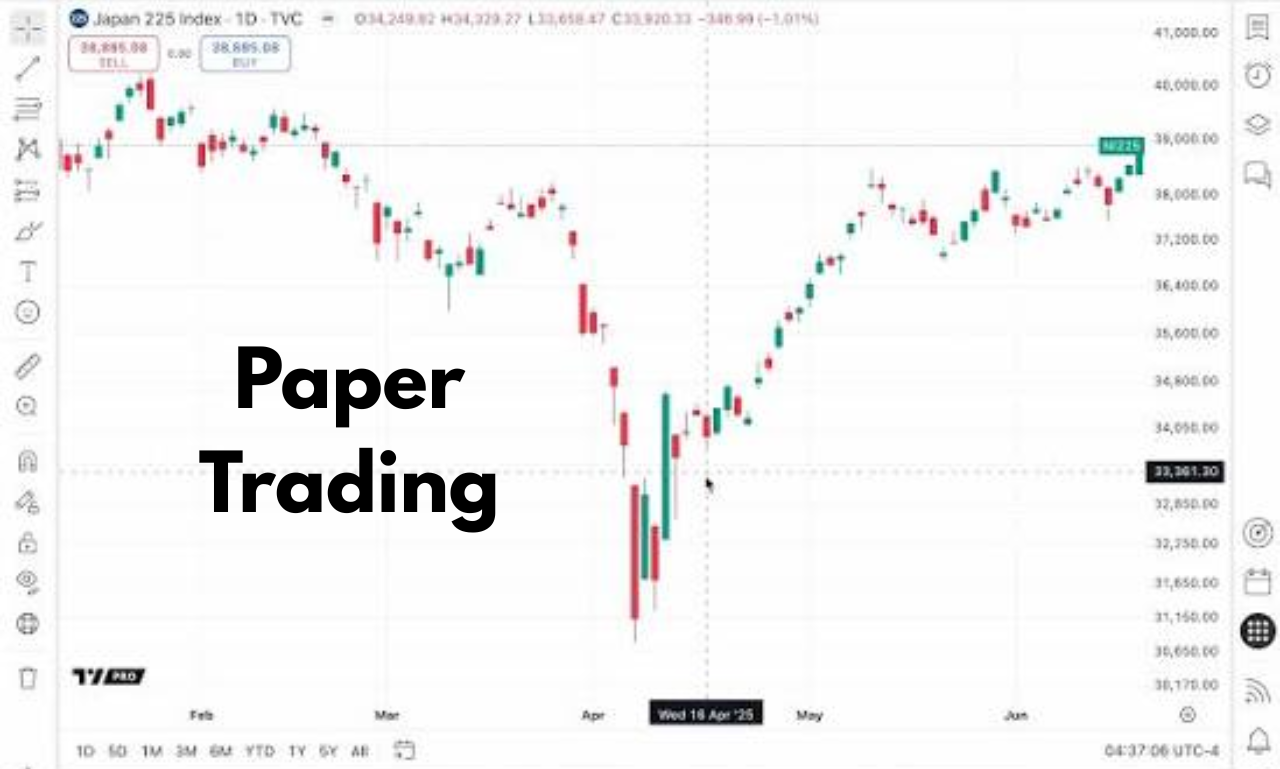
Paper trading is a simulated trading method that allows beginners and experienced traders to practice buying and selling financial assets without risking real money. It uses virtual funds to replicate real market conditions, helping users understand trading platforms, test strategies, and improve decision-making skills.
Before entering live markets, many traders use paper trading to develop confidence and learn how different strategies perform under various market conditions. In this guide, you will learn what paper trading is, how it works, its benefits and limitations, how it differs from real trading, and why it is an important tool for new investors. Whether you are interested in stocks, cryptocurrency, forex, or options trading, paper trading can help you gain practical experience safely.
What Is Paper Trading?
Paper trading is a practice method where traders execute simulated trades using virtual money instead of actual capital.
The term originated when investors used paper records to track hypothetical trades before placing real orders.
Today, digital trading platforms provide paper trading accounts that simulate live market environments.
Key features include:
- Virtual trading balance
- Real-time market prices
- Simulated buy and sell orders
- Portfolio tracking
- Performance reports
- Strategy testing
Paper trading helps users learn without facing financial losses.
How Does Paper Trading Work?
Paper trading works similarly to real trading but uses simulated funds.
The process usually involves:
- Creating a paper trading account
- Receiving virtual money
- Selecting financial assets
- Placing simulated trades
- Tracking performance
- Reviewing results
- Improving strategies
For example, a trader can purchase 10 shares of a company using virtual money and monitor how the investment performs over time.
Why Is Paper Trading Important?
Paper trading is valuable because it allows traders to gain practical experience before risking real capital.
Major benefits include:
- Learning trading platforms
- Understanding market movements
- Testing strategies
- Practicing risk management
- Building confidence
- Reducing beginner mistakes
Many professional traders use simulation environments before applying new strategies in live markets.
Paper Trading vs Real Trading
Although paper trading looks similar to real trading, there are important differences.
| Feature | Paper Trading | Real Trading |
| Money Used | Virtual funds | Real capital |
| Emotional Pressure | Low | High |
| Financial Risk | None | Possible losses |
| Execution | Simulated | Actual market execution |
| Learning Purpose | Practice | Profit generation |
| Psychology | Different | Real emotions involved |
Paper trading prepares traders technically, but real trading introduces emotional and financial challenges.
Benefits of Paper Trading for Beginners
Beginners can gain several advantages from using a simulated trading environment.
Important benefits include:
- Understanding market basics
- Learning order types
- Practicing chart analysis
- Testing investment ideas
- Developing discipline
- Building confidence
- Avoiding costly beginner mistakes
New traders can experiment without worrying about losing money.
How Paper Trading Helps Test Trading Strategies
One of the biggest advantages of paper trading is strategy testing.
Traders can evaluate:
- Entry points
- Exit strategies
- Stop-loss placement
- Position sizing
- Risk-reward ratios
- Market timing
For example, a swing trader can test whether a strategy works over several weeks before using real funds.
Types of Markets Available for Paper Trading
Paper trading is available across many financial markets.
Stock Paper Trading
Traders can practice:
- Buying company shares
- Analyzing stock charts
- Testing investment strategies
Crypto Paper Trading
Crypto traders can simulate:
- Bitcoin trades
- Ethereum positions
- Cryptocurrency strategies
Forex Paper Trading
Forex simulation allows practice with:
- Currency pairs
- Exchange rate movements
- Trading indicators
Options Paper Trading
Options traders can learn:
- Calls and puts
- Option pricing
- Expiration strategies
Best Paper Trading Platforms
Many brokers and financial platforms offer simulated trading tools.
Common features to look for:
| Feature | Importance |
| Real-Time Data | Creates realistic practice |
| Charting Tools | Helps technical analysis |
| Multiple Markets | Expands learning |
| Performance Tracking | Measures progress |
| Educational Resources | Improves knowledge |
A good paper trading platform should closely resemble actual market conditions.
Common Mistakes While Paper Trading
Although paper trading is useful, beginners often make mistakes.
Common errors include:
- Taking unrealistic risks
- Ignoring trading fees
- Testing only profitable scenarios
- Trading without a plan
- Overconfidence after success
- Ignoring emotional discipline
A successful paper trading experience requires treating it seriously.
Does Paper Trading Prepare You for Real Trading?
Paper trading provides valuable practice but cannot fully recreate live market conditions.
It helps traders learn:
- Technical skills
- Platform navigation
- Strategy testing
- Market analysis
However, real trading includes:
- Fear of losses
- Greed
- Stress
- Emotional decisions
- Actual financial consequences
The transition from paper trading to live trading should happen gradually.
How Long Should You Paper Trade?
There is no fixed time period for paper trading.
The duration depends on:
- Trading knowledge
- Strategy consistency
- Market understanding
- Personal confidence
Many beginners practice for several weeks or months before entering live markets.
The goal is not simply making virtual profits but developing disciplined trading habits.
Paper Trading and Risk Management
Paper trading is an excellent way to practice risk management techniques.
Traders can learn:
- Setting stop-loss orders
- Managing position sizes
- Limiting losses
- Creating trading plans
- Maintaining risk-reward ratios
Good habits developed during simulation can improve future trading decisions.
Future of Paper Trading in 2026
Technology continues improving simulated trading experiences.
Future developments may include:
- AI trading simulations
- Advanced market scenarios
- Personalized learning tools
- Virtual trading competitions
- Automated performance analysis
- Realistic trading environments
As more people enter financial markets, paper trading will remain an important educational tool.
Frequently Asked Questions:
What is paper trading in simple words?
Paper trading is a practice method where traders use virtual money to simulate real market transactions.
Is paper trading free?
Many platforms offer free paper trading accounts, although some advanced tools may require payment.
Can beginners use paper trading?
Yes, paper trading is especially useful for beginners learning markets and trading strategies.
Does paper trading use real market data?
Many platforms provide real-time or delayed market data for realistic practice.
Can you make money with paper trading?
Paper trading uses virtual money, so profits are not real. It is designed for learning.
How long should I practice paper trading?
The time varies, but traders should practice until they understand strategies and risk management.
Is paper trading the same as investing?
No. Paper trading is simulation, while investing involves actual money and ownership of assets.
Can I paper trade cryptocurrency?
Yes, many platforms offer simulated crypto trading environments.
Does paper trading guarantee success?
No. It improves skills but does not guarantee profits in real markets.
What is the biggest advantage of paper trading?
The biggest advantage is learning and testing strategies without risking real money.
Conclusion
Paper trading is one of the most effective ways for beginners and developing traders to gain market experience without financial risk. It allows users to practice strategies, understand trading platforms, and improve decision-making before entering live markets.
While paper trading cannot fully replicate the emotions and pressure of real trading, it provides valuable technical preparation. Traders who use simulation seriously, track results, and focus on risk management can build stronger foundations for future success. In 2026, with advanced digital platforms and realistic market simulations, paper trading continues to be an essential learning tool for anyone interested in stocks, crypto, forex, or options trading.