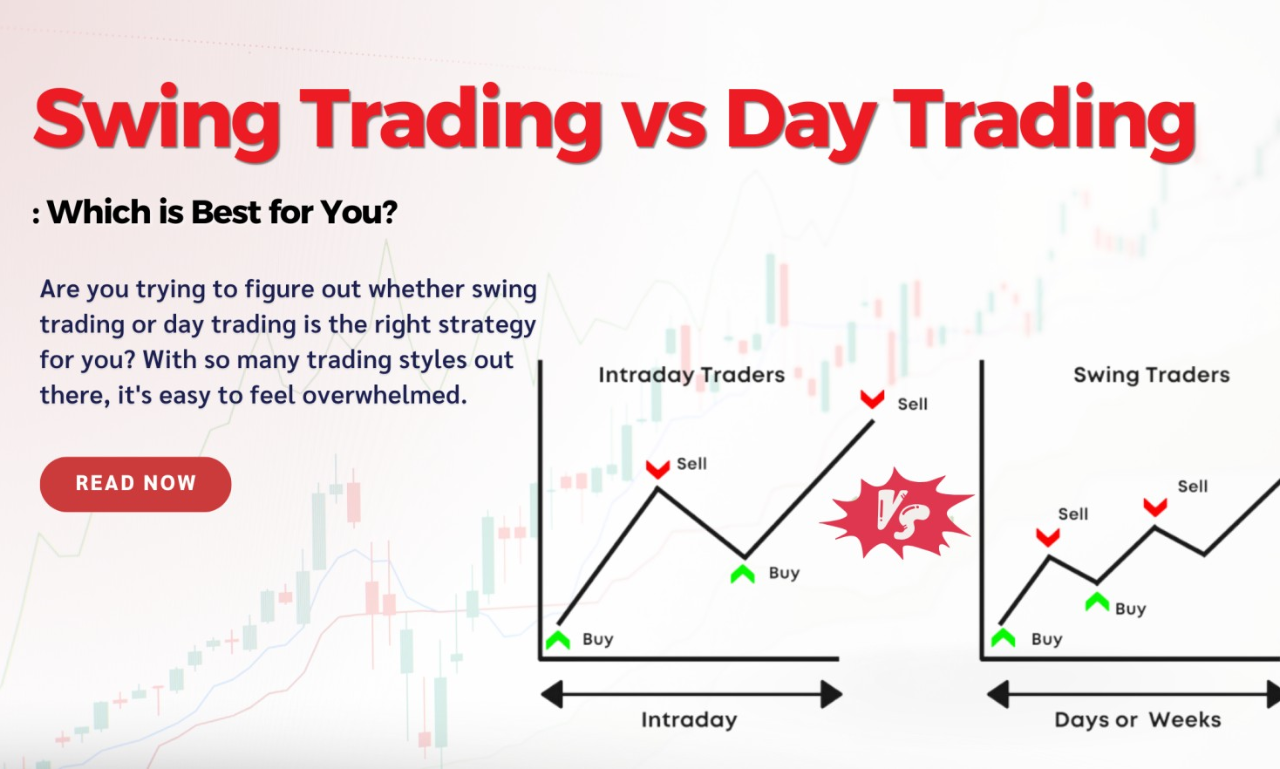
The debate “swing trading vs day trading” is common among new and experienced traders who want to choose the right trading style for their financial goals. Both approaches aim to profit from market movements, but they differ in timeframes, strategies, risk levels, and the amount of time required.
Day trading focuses on short-term price movements within a single trading session, while swing trading attempts to capture larger market moves over several days or weeks. Choosing between them depends on your experience, available time, risk tolerance, and trading objectives.
This guide explains the major differences between swing trading and day trading, their advantages and disadvantages, required skills, strategies, and which approach may be more suitable for different types of traders.
What Is Swing Trading?
Swing trading is a trading strategy where traders hold financial assets for several days, weeks, or sometimes months to benefit from short-to-medium-term price movements.
Swing traders attempt to capture market “swings” caused by:
- Price trends
- Market momentum
- Technical patterns
- Fundamental changes
The goal is not to predict every small movement but to identify larger opportunities.
What Is Day Trading?
Day trading involves buying and selling financial assets within the same trading day.
Day traders usually close all positions before the market closes to avoid overnight risks.
Common day trading markets include:
- Stocks
- Forex
- Cryptocurrency
- Futures
- Options
Day traders focus on quick price movements and often execute multiple trades daily.
Swing Trading vs Day Trading: Quick Comparison
| Feature | Swing Trading | Day Trading |
| Holding Period | Days to weeks | Minutes to hours |
| Trading Frequency | Lower | Higher |
| Time Required | 1–3 hours daily | Full-time attention |
| Stress Level | Moderate | High |
| Analysis Style | Technical + fundamental | Mostly technical |
| Capital Requirement | Lower flexibility | Often higher |
| Overnight Risk | Possible | Usually avoided |
Main Differences Between Swing Trading and Day Trading
Trading Timeframe
The biggest difference is the length of time positions are held.
Swing Trading
Swing traders may hold positions for:
- Several days
- Multiple weeks
- Longer market trends
Day Trading
Day traders complete trades:
- Within minutes
- Within hours
- Before market closing
Strategy Differences
Swing Trading Strategies
Popular swing trading methods include:
- Trend following
- Moving average strategies
- Support and resistance trading
- Breakout trading
- Fibonacci retracement analysis
Swing traders usually look for bigger price movements.
Day Trading Strategies
Common day trading strategies include:
- Scalping
- Momentum trading
- Breakout trading
- Range trading
- News-based trading
Day traders focus on small but frequent opportunities.
Advantages of Swing Trading
Swing trading offers several benefits:
Less Time Commitment
Traders do not need to watch charts constantly.
Suitable for:
- Working professionals
- Students
- Part-time traders
Lower Stress
Because trades are less frequent, emotional pressure may be reduced.
Larger Profit Targets
Swing traders aim for bigger price movements compared with day traders.
Disadvantages of Swing Trading
Despite its benefits, swing trading has challenges:
- Overnight market risk
- Requires patience
- Slower results
- Requires proper trend analysis
Advantages of Day Trading
Day trading provides unique advantages:
No Overnight Risk
Positions are closed before market closure.
More Trading Opportunities
Markets provide many short-term movements.
Faster Results
Profits and losses appear quickly.
Disadvantages of Day Trading
Day trading also involves significant challenges:
- High stress levels
- Requires strong discipline
- More transaction costs
- Requires constant market monitoring
- Higher emotional pressure
Skills Required for Swing Trading
Successful swing traders usually develop:
- Market analysis skills
- Patience
- Risk management
- Chart reading ability
- Trading discipline
Important tools include:
- Candlestick patterns
- Trend indicators
- Volume analysis
- Moving averages
Skills Required for Day Trading
Day traders need:
- Fast decision-making
- Strong emotional control
- Technical analysis skills
- Quick execution ability
- Risk management knowledge
They often use:
- Real-time charts
- Trading platforms
- Market scanners
Swing Trading vs Day Trading: Risk Comparison
| Risk Factor | Swing Trading | Day Trading |
| Market Exposure | Longer | Shorter |
| Overnight Risk | Higher | Lower |
| Emotional Pressure | Moderate | High |
| Trade Frequency Risk | Lower | Higher |
| Learning Difficulty | Moderate | Advanced |
Which Trading Style Is Better for Beginners?
For many beginners, swing trading may be easier because:
- It requires less screen time
- Decisions can be more calculated
- Trading frequency is lower
- Emotional pressure is reduced
However, beginners should still practice using:
- Demo accounts
- Paper trading
- Risk management techniques
Which Trading Style Requires More Money?
Capital requirements depend on the market and broker rules.
Generally:
Swing Trading
May require less active capital because traders make fewer trades.
Day Trading
May require more capital because:
- More trades are executed
- Transaction costs increase
- Fast losses can occur
Swing Trading vs Day Trading Psychology
Trading psychology plays a major role.
Swing Trading Mindset
Requires:
- Patience
- Waiting for setups
- Accepting temporary price movements
Day Trading Mindset
Requires:
- Fast reactions
- Emotional control
- Ability to handle frequent wins and losses
Tools Used by Swing and Day Traders
| Tool | Swing Trading | Day Trading |
| Charts | Daily/weekly charts | Minute charts |
| Indicators | Moving averages, RSI | VWAP, volume indicators |
| News | Important | Extremely important |
| Trading Platforms | Standard platforms | Advanced platforms |
Can You Combine Swing Trading and Day Trading?
Yes, some traders use both strategies.
For example:
- Use swing trading for long-term opportunities
- Use day trading for short-term market movements
However, beginners should master one style before combining approaches.
Common Mistakes Traders Make
Avoid these mistakes:
- Trading without a plan
- Ignoring risk management
- Overtrading
- Following social media tips
- Investing emotionally
- Using excessive leverage
Swing Trading vs Day Trading: Which One Should You Choose?
Choose swing trading if you:
- Have limited daily time
- Prefer slower decisions
- Want fewer trades
Choose day trading if you:
- Can monitor markets actively
- Enjoy fast decision-making
- Understand advanced technical analysis
The best choice depends on your lifestyle and personality.
Frequently Asked Questions:
What is the main difference between swing trading and day trading?
Swing trading holds positions for days or weeks, while day trading completes trades within the same day.
Is swing trading safer than day trading?
Swing trading may involve less emotional pressure, but it still carries market risks.
Is day trading profitable?
Day trading can be profitable, but it requires advanced skills, discipline, and risk management.
Which trading style is better for beginners?
Many beginners find swing trading easier because it requires less time and fewer decisions.
How much time does day trading require?
Day trading often requires several hours of daily market monitoring.
Can I do swing trading with a full-time job?
Yes, many people use swing trading because it requires less constant attention.
Which trading style makes more money?
Both can be profitable, but results depend on strategy, skill, and risk management.
Do swing traders use technical analysis?
Yes, many swing traders rely on technical indicators and chart patterns.
Do day traders hold positions overnight?
Most day traders close positions before the market closes.
Can beginners learn both trading styles?
Yes, but learning one approach first is usually more effective.
Conclusion
The comparison of swing trading vs day trading depends on your goals, available time, personality, and risk tolerance. Swing trading offers a slower approach with fewer trades and less screen time, making it suitable for many beginners and part-time traders. Day trading provides faster opportunities but requires greater focus, discipline, and experience.
Neither strategy guarantees profits, and both require proper education, risk management, and emotional control. Before choosing a trading style, understand your strengths and practice through simulated trading. A consistent strategy and disciplined approach matter more than the trading method itself.