
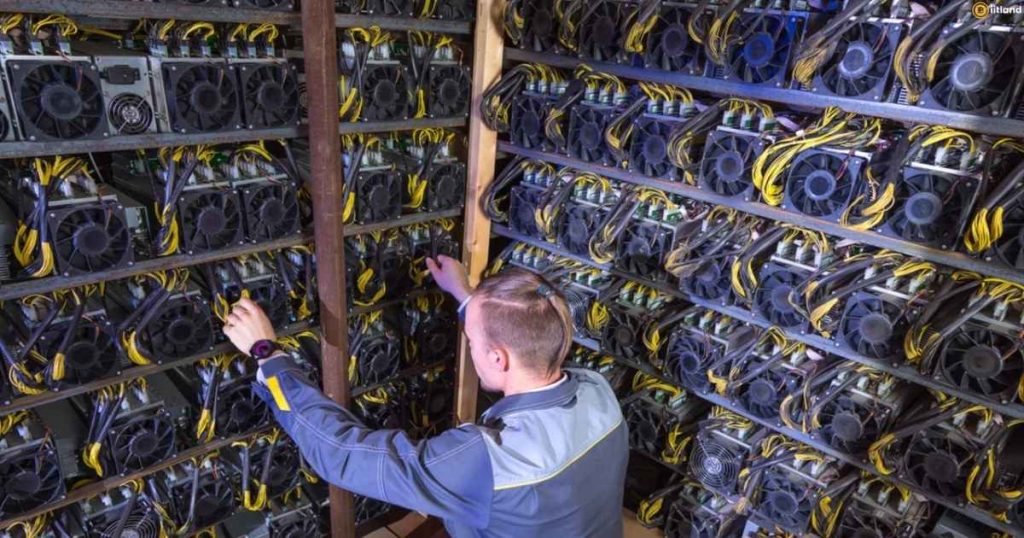
Bitcoin mining plays a crucial role in the functioning of the cryptocurrency ecosystem. It is responsible for creating new bitcoins, verifying transactions, and maintaining the overall security of the blockchain network. Unlike traditional financial systems that rely on centralized authorities like banks, Bitcoin operates on a decentralized system, where miners across the globe contribute their computing power to keep the network running smoothly.
At its core, Bitcoin mining is a process that combines advanced technology, cryptography, and economic incentives. Miners validate transactions and add them to a public ledger known as the blockchain ledger, ensuring transparency and trust. In return for their work, miners earn rewards in the form of newly minted bitcoins along with transaction fees, making mining both a technical and profit-driven activity.
What Is Bitcoin Mining?
Bitcoin mining refers to the process of introducing new coins into circulation while also verifying and recording transactions on the blockchain. It is a key component of the decentralized digital currency system, ensuring that all transactions are legitimate and securely stored.
Instead of relying on a central authority, Bitcoin depends on a distributed network of miners. These miners use powerful computers to solve complex mathematical problems, which are essential for validating transactions. Once verified, transactions are grouped into blocks and permanently added to the blockchain. As a reward for their contribution, miners receive block rewards and transaction fees, which incentivize continued participation in the network.
How Does Bitcoin Mining Work?
The Bitcoin mining process begins when transactions are broadcast to the network. Miners collect these transactions into blocks and compete to validate them by solving cryptographic puzzles. This process is known as proof of work, a system designed to ensure the network remains secure and resistant to fraud.
Miners use specialized hardware to generate hashes, which are unique codes created through the SHA-256 hashing algorithm. To find the correct hash, miners repeatedly adjust a value called a nonce, producing different combinations until one meets the required criteria set by the network’s difficulty level. This process demands significant computational power and energy, making mining highly competitive.
Once a miner successfully finds a valid hash, the solution is shared with the network for verification. Other miners confirm its accuracy, and the block is then added to the blockchain. The successful miner is rewarded with newly generated bitcoins and network transaction fees. This system not only introduces new bitcoins into circulation but also ensures the integrity, transparency, and security of all transactions within the Bitcoin ecosystem.
How Are New Bitcoins Created?
New bitcoins are generated through the process of Bitcoin mining, where miners validate transactions and add new blocks to the blockchain network. Each time a miner successfully solves a cryptographic puzzle, a new block is confirmed and appended to the public ledger. As a reward for this effort, the miner receives freshly created bitcoins, known as the block reward, along with transaction fees from the included transactions.
This system ensures that new coins enter circulation in a controlled and predictable way. The mining process not only introduces new bitcoins but also strengthens the security of the blockchain, as every block added must be verified by the network. This makes Bitcoin a decentralized and trustless system, where no central authority controls issuance or validation.
What Is Bitcoin Halving and Why Does It Matter?
A key feature of Bitcoin’s design is the halving mechanism, which reduces the block reward approximately every four years. This means miners receive fewer bitcoins over time, gradually limiting the total supply. This built-in scarcity introduces a deflationary model, helping maintain value and preventing excessive inflation.
As rewards decrease, the mining difficulty typically increases due to growing competition and network power. This ensures that mining remains challenging, secure, and fair. Overall, Bitcoin mining is not just about generating coins it plays a vital role in maintaining the integrity, transparency, and long-term sustainability of the entire cryptocurrency ecosystem.
FAQs
What is the block reward in Bitcoin mining?
The block reward is the amount of newly created bitcoins given to a miner after successfully validating a block. It also includes transaction fees, making it the main incentive for miners to secure the blockchain network.
How often does Bitcoin halving occur?
The Bitcoin halving event happens roughly every four years. During this event, the block reward is cut in half, reducing the rate at which new bitcoins are created and supporting a deflationary supply model.
Why is Bitcoin mining important?
Bitcoin mining is essential because it validates transactions, prevents fraud like double spending, and maintains the security and decentralization of the network.
Can the total supply of Bitcoin increase indefinitely?
No, Bitcoin has a fixed supply limit of 21 million coins. The controlled issuance mechanism and halving events ensure that no more bitcoins are created beyond this cap.
What happens when all bitcoins are mined?
Once all bitcoins are mined, miners will no longer receive block rewards. Instead, they will earn income through transaction fees, which will continue to support the network’s operation.
Conclusion
Bitcoin mining is far more than just a method of producing new coins it is the foundation of the entire blockchain ecosystem. By solving complex puzzles and validating transactions, miners ensure that the network remains secure, transparent, and decentralized. The introduction of mechanisms like proof of work and halving helps maintain balance, preventing inflation while encouraging long-term sustainability.
As technology evolves, Bitcoin mining continues to adapt with improved hardware, energy efficiency, and innovative practices. Despite challenges such as rising costs and environmental concerns, it remains a crucial pillar of the cryptocurrency landscape, driving both innovation and trust in digital financial systems.

