
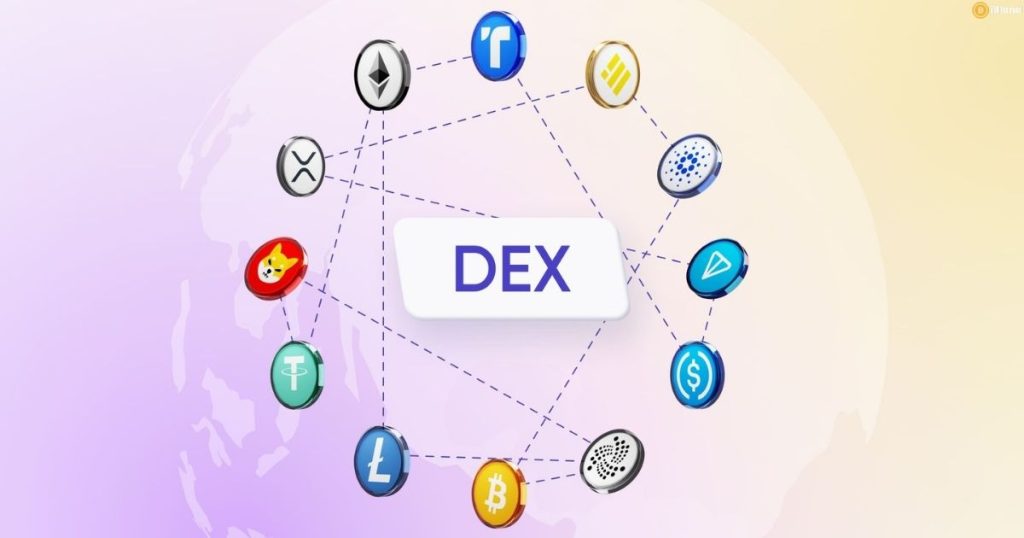
A Decentralized Crypto Exchange (DEX) is a type of crypto trading platform that allows users to buy, sell, and swap digital assets directly with each other without relying on banks, brokers, or any central authority. It works on blockchain technology using smart contracts, which automatically execute trades in a secure and transparent way. Popular examples of DEX platforms include Uniswap, SushiSwap, and PancakeSwap, which are widely used in the DeFi (Decentralized Finance) ecosystem.
Unlike traditional centralized exchanges, DEX platforms give users full control over their funds because assets remain in their personal wallets instead of being stored on the exchange. This makes trading more private and reduces the risk of hacking at a central point. However, using a DEX also requires some technical knowledge, as users must handle wallets, transactions, and security themselves.
How Does a Decentralized Exchange Work?
A DEX works using smart contracts, which are self-executing programs on the blockchain. These contracts automatically manage trading between users by connecting buyers and sellers through liquidity pools.
Liquidity pools are collections of crypto funds provided by users, and in return, they earn rewards. This system allows trading without intermediaries, making the process faster and more decentralized.
Unlike centralized exchanges, DEX platforms do not use a traditional order book system controlled by a company. Instead, everything is executed directly on the blockchain network, improving transparency and reducing control by third parties.
Difference Between DEX and Centralized Exchange (CEX)
A Centralized Exchange (CEX) is controlled by a company that manages user funds and executes trades through an internal system. In contrast, a DEX operates in a fully decentralized environment where users maintain control of their assets.
Key differences include:
- CEX: Managed by a central authority
- DEX: Powered by blockchain smart contracts
- CEX: Allows fiat-to-crypto trading
- DEX: Supports only crypto-to-crypto swaps
- CEX: Uses internal order books
- DEX: Uses liquidity pools and on-chain settlement
Key Benefits of Decentralized Exchanges
DEX platforms offer several advantages in the DeFi space, including:
- Wide token access: Users can trade thousands of tokens, including new and emerging projects
- Full control of funds: Assets remain in user wallets, reducing custodial risk
- Privacy-focused trading: Most DEXs do not require identity verification
- Global accessibility: Anyone with internet access can participate
- Lower hacking risk on exchange level: Since funds are not stored centrally
Risks and Limitations of DEX Platforms
Despite their advantages, decentralized crypto exchanges also come with risks:
- Complex user experience: Requires basic blockchain knowledge
- Irreversible transactions: Mistakes like sending funds to the wrong wallet cannot be undone
- Impermanent loss: Liquidity providers may face value loss in volatile markets
- Smart contract risks: Bugs or exploits in code can lead to fund loss
- Scam tokens: Open listing systems may include fraudulent projects
FAQs
What is a decentralized exchange (DEX)?
A decentralized exchange (DEX) is a peer-to-peer crypto trading platform where users can trade digital assets directly without intermediaries like banks or brokers, using blockchain technology.
How does a DEX work?
A DEX works through smart contracts and liquidity pools that automatically execute and facilitate crypto trades on the blockchain without a central authority.
Is a decentralized exchange safe to use?
DEX platforms are generally secure because users control their own funds, but risks still exist such as smart contract bugs, scam tokens, and user errors.
What is the difference between DEX and CEX?
A CEX is a centralized platform managed by a company, while a DEX operates on blockchain technology without a central authority and allows peer-to-peer trading.
What are the benefits of using a DEX?
DEX platforms offer privacy, global access, wide token availability, and full control over funds, making them popular in the DeFi ecosystem.
Final Insight
Decentralized Exchange (DEX) plays an important role in the growth of the DeFi ecosystem by enabling direct, peer-to-peer trading of cryptocurrencies without intermediaries. It offers key advantages such as full control of funds, increased privacy, and global accessibility, making it a powerful alternative to traditional centralized exchanges. DEX platforms continue to evolve as blockchain technology becomes more advanced and widely adopted.
However, despite these benefits, DEX platforms also come with certain risks, including smart contract vulnerabilities, user errors, and scam tokens. Therefore, users must have proper knowledge before using them. Overall, DEXs represent a major step toward a more decentralized and transparent financial system, but responsible usage and awareness are essential for safe trading.

