
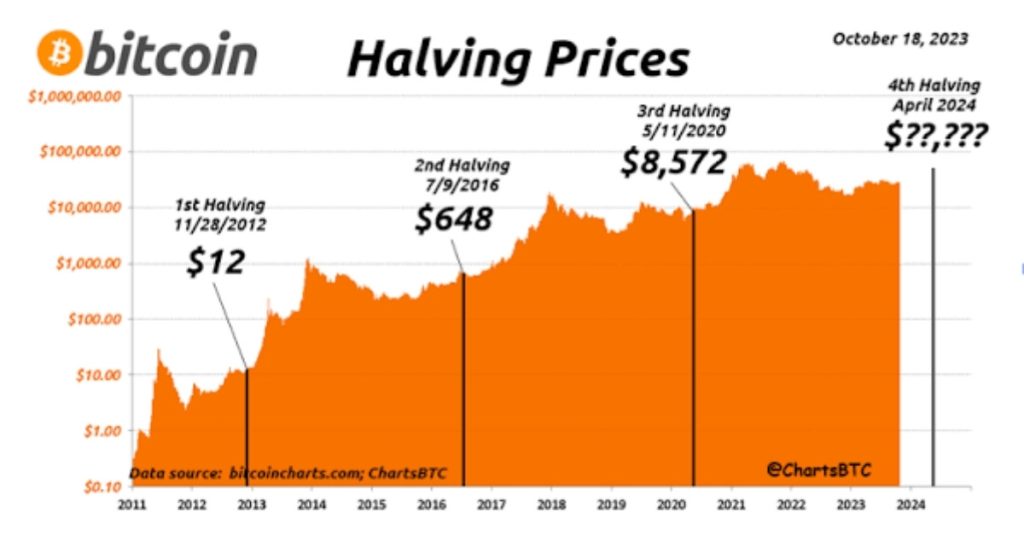
Bitcoin halving is one of the most important events in the Bitcoin network because it controls how new coins enter circulation. Many beginners ask what is bitcoin halving for beginners because the process affects mining rewards, Bitcoin’s scarcity, and the overall supply system. Bitcoin halving occurs when the block reward given to miners is reduced by 50 percent after every 210,000 blocks. This built-in mechanism helps maintain Bitcoin’s limited supply of 21 million coins. Understanding how halving works provides insight into Bitcoin mining, price discussions, and its long-term economic model without confusing technical details.
Summary
Bitcoin halving is a programmed event that cuts the block reward given to miners by 50 percent after a specific number of blocks are added to the Bitcoin network. The process is part of Bitcoin’s original design created by its anonymous founder, Satoshi Nakamoto, to control supply and make Bitcoin a scarce digital asset.
Unlike traditional currencies that can be increased through decisions made by governments or central banks, Bitcoin follows a fixed supply schedule. Only 21 million coins can ever exist, and halvings gradually slow the creation of new bitcoins until the maximum supply is reached.
| Bitcoin Halving Fact | Details |
| Purpose | Reduce the number of new bitcoins created |
| Reduction Rate | 50 percent decrease in block reward |
| Halving Frequency | Approximately every 4 years |
| Block Interval | Around 10 minutes per block |
| Block Requirement | Every 210,000 blocks |
| Maximum Supply | 21 million Bitcoin |
| Initial Block Reward | 50 BTC in 2009 |
| Current Block Reward After 2024 Halving | 3.125 BTC |
| Expected Next Halving | 2028 |
| Expected Future Reward | 1.5625 BTC |
What Does Bitcoin Halving Mean?
Understanding the Bitcoin Halving Process
Bitcoin halving is an automatic event written into Bitcoin’s software that reduces the mining reward by half. Every time miners successfully add a new block to the blockchain, they receive a reward consisting of newly created bitcoins and transaction fees. This reward is called the block reward or block subsidy.
During a halving event, the block subsidy is reduced by 50 percent. For example, when Bitcoin launched in 2009, miners received 50 BTC for every block they created. After the first halving in 2012, the reward decreased to 25 BTC. Later halvings continued reducing this amount.
The purpose of this process is to gradually slow Bitcoin creation. Instead of releasing all 21 million coins quickly, Bitcoin’s supply is distributed over many years. This controlled release creates a predictable supply schedule that anyone can verify through Bitcoin’s software.
Bitcoin halving is not the same as a stock split or token swap. A stock split increases the number of shares while adjusting the price, but Bitcoin halving does not change the amount of Bitcoin users already own. If someone holds Bitcoin in their wallet before a halving, their wallet balance remains exactly the same afterward.
The halving only affects the amount of new Bitcoin entering circulation through mining. Existing coins, private keys, transactions, and wallet balances are not modified by the event.
Why Does Bitcoin Halving Happen?
Bitcoin’s Limited Supply Model
Bitcoin halving happens because Bitcoin was designed to function as a scarce digital asset. Traditional currencies can be expanded when governments or central banks increase money supply, but Bitcoin follows strict rules that limit its creation.
The maximum supply of Bitcoin is fixed at 21 million coins. The halving mechanism ensures that new bitcoins enter the market at a decreasing rate. This creates a predictable monetary system where participants know how many bitcoins will be produced and approximately when new supply will slow down.
The main reasons Bitcoin halving happens include:
- Controlling inflation: Reducing block rewards lowers the rate at which new bitcoins are created.
- Creating scarcity: Fewer new coins entering circulation can make Bitcoin a more limited asset.
- Maintaining long-term distribution: Halving spreads Bitcoin issuance over more than a century.
- Supporting the fixed supply model: The system protects Bitcoin’s 21 million coin limit.
The Bitcoin network does not rely on a central authority to decide when halvings occur. Instead, Bitcoin’s software automatically follows predetermined rules based on block height. Once miners produce approximately 210,000 blocks, the network triggers the next reduction.
This predictable supply schedule is one of Bitcoin’s most unique characteristics. Supporters argue that scarcity makes Bitcoin different from traditional currencies, while critics point out that scarcity alone does not determine value because demand, adoption, regulation, and market conditions also play important roles.
How Often Does Bitcoin Halving Occur?
The Four-Year Bitcoin Halving Cycle
Bitcoin halving occurs approximately every four years. More precisely, the event happens after every 210,000 blocks are added to the blockchain. Since Bitcoin blocks are created roughly every 10 minutes, reaching this number usually takes around four years.
Read More : Dogecoin Explained: From Joke Meme to Billion-Dollar Crypto
However, the exact date of a halving cannot be predicted perfectly because block production speed changes over time. The Bitcoin network automatically adjusts mining difficulty to maintain an average block creation time close to 10 minutes.
The expected halving cycle works like this:
- Miners create new Bitcoin blocks.
- The network counts completed blocks.
- After reaching 210,000 blocks, the block reward is reduced by half.
- Miners continue processing transactions with the new reward amount.
The first Bitcoin halving reduced the reward from 50 BTC to 25 BTC. Over time, repeated halvings continue reducing the amount of new Bitcoin entering circulation.
The next expected Bitcoin halving is projected around 2028, when the block subsidy is expected to decrease from 3.125 BTC to approximately 1.5625 BTC.
This gradual reduction is a key part of Bitcoin’s long-term supply schedule. Unlike assets where supply can suddenly increase, Bitcoin’s production rate is transparent and predictable.
Bitcoin Halving History
| Year | Halving Event | Block Reward Before | Block Reward After |
| 2009 | Bitcoin launch | — | 50 BTC |
| 2012 | First halving | 50 BTC | 25 BTC |
| 2016 | Second halving | 25 BTC | 12.5 BTC |
| 2020 | Third halving | 12.5 BTC | 6.25 BTC |
| 2024 | Fourth halving | 6.25 BTC | 3.125 BTC |
| 2028 | Next expected halving | 3.125 BTC | 1.5625 BTC |
What Is a Bitcoin Block Reward?
Understanding Mining Rewards and Block Subsidy
A Bitcoin block reward is the payment miners receive for successfully adding a new block to the blockchain. It includes two main components: the block subsidy and transaction fees.
The block subsidy represents newly created bitcoins. This is the portion affected by Bitcoin halving. Transaction fees, however, are paid by users who want their transactions processed and are not directly reduced during halving events.
When Bitcoin launched in 2009, the block reward was 50 BTC. After multiple halvings, the reward decreased to 3.125 BTC after the 2024 halving.
The block reward system serves several important purposes:
- It encourages miners to secure the Bitcoin network.
- It introduces new bitcoins into circulation.
- It compensates miners for electricity and hardware costs.
- It maintains the decentralized nature of Bitcoin mining.
Mining requires specialized hardware such as ASIC miners, which are machines designed specifically for cryptocurrency mining. These devices compete to solve complex mathematical problems and confirm transactions.
As the block reward decreases, miners increasingly depend on operational efficiency and transaction fees. Factors such as hashrate, electricity costs, cooling expenses, and mining equipment efficiency become more important.
The gradual reduction of the block subsidy is designed so that Bitcoin can eventually operate primarily through transaction fees after all 21 million coins have been mined.
What Does Halving Mean for Home Miners?
Challenges and Opportunities for Individual Bitcoin Miners
Bitcoin halving has a major impact on home miners because individual mining operations usually have fewer resources compared with large-scale mining companies. When the block reward decreases by 50 percent, home miners must carefully evaluate whether their equipment and electricity costs still allow them to make a profit.
In the early days of Bitcoin, individuals could mine using ordinary computers. However, Bitcoin mining has become much more competitive over time. Today, most serious miners use specialized ASIC miners designed specifically for Bitcoin mining. These machines provide high computing power but also consume significant electricity.
After a halving event, home miners need to consider several factors:
- Electricity cost per kilowatt-hour: Power expenses are often the largest mining cost.
- Mining equipment efficiency: Older machines may become unprofitable after reward reductions.
- Cooling costs: Mining hardware produces significant heat and may require additional cooling systems.
- Maintenance expenses: Hardware repairs and replacements affect overall returns.
- Mining pool fees: Joining a pool helps provide regular payouts but reduces earnings slightly.
Many home miners choose to join a mining pool rather than attempt solo-mining. Solo-mining requires enormous computing power and offers unpredictable rewards because only one miner receives the block reward when successfully creating a block.
Efficiency becomes the key factor after every Bitcoin halving. A miner using outdated equipment may spend more on electricity than the value of the Bitcoin earned. In contrast, miners with efficient hardware and affordable energy sources have a better chance of remaining competitive.
For beginners interested in mining, understanding profitability calculations is essential. They should evaluate hardware costs, electricity expenses, expected earnings, and the payback period before purchasing mining equipment.
Bitcoin halving does not make home mining impossible, but it raises the importance of planning, efficiency, and cost management.
Can Bitcoin Continue After All Coins Are Mined?
The Future of Bitcoin Mining Beyond 21 Million Coins
Bitcoin has a maximum supply limit of 21 million coins, which means no new bitcoins will be created after all coins have been mined. This raises an important question: If miners no longer receive new Bitcoin through block subsidies, why would they continue securing the network?
The answer is transaction fees.
Currently, Bitcoin miners earn income from two sources:
- Block subsidy: Newly created bitcoins included in each block reward.
- Transaction fees: Payments made by users who want their transactions confirmed.
As Bitcoin halvings continue, the block subsidy will gradually decrease. Eventually, transaction fees are expected to become the primary source of income for miners.
The final Bitcoin is expected to be mined around the year 2140 because the supply reduction process becomes increasingly smaller over time. The block reward does not disappear suddenly; instead, it approaches zero through repeated halvings.
The transition from block subsidies to transaction fees is an important part of Bitcoin’s long-term design. The network depends on miners continuing to verify transactions and maintain security even when new coin creation ends.
Several factors may influence this future system:
- Growth in Bitcoin adoption.
- Increased transaction demand.
- Changes in transaction fee markets.
- Improvements in Bitcoin technology.
- Global acceptance of Bitcoin payments.
Some critics question whether transaction fees alone will provide enough incentive for miners in the future. Supporters argue that as Bitcoin becomes more valuable and widely used, transaction fees may provide sufficient compensation.
Bitcoin’s design intentionally created a gradual transition. The halving process allows the network to move from a new-coin distribution model toward a transaction-based security model over more than a century.
Why Is Bitcoin Halving Important?
The Role of Halving in Bitcoin’s Economic System
Bitcoin halving is important because it controls Bitcoin’s supply growth and strengthens its position as a scarce digital asset. It is one of the most unique features separating Bitcoin from traditional currencies and many other cryptocurrencies.
Read More : Cardano (ADA) vs Bitcoin: Key Differences You Must Know
Traditional currencies can experience inflation when governments or central banks increase money supply. Bitcoin takes a different approach by following a transparent supply schedule built into its software.
The importance of Bitcoin halving can be understood through several key points:
- Creates predictable scarcity: The number of new bitcoins entering circulation becomes increasingly limited.
- Controls inflation: Lower block rewards reduce the rate of new Bitcoin creation.
- Supports Bitcoin’s monetary policy: The 21 million coin limit remains unchanged.
- Encourages mining innovation: Miners must improve efficiency to remain competitive.
- Influences market discussions: Investors monitor halvings because supply changes can affect expectations.
Bitcoin halving also demonstrates the power of decentralized systems. No company, government, or individual can manually change the reward schedule. The rules are enforced by Bitcoin’s software and verified by participants across the network.
For investors and beginners, understanding halving helps explain why Bitcoin is often described as a scarce asset similar to digital gold. However, scarcity alone does not Determine Success. Bitcoin’s future depends on adoption, technology development, regulation, market demand, and user trust.
The halving process represents a long-term economic experiment. It shows how a digital currency can manage supply without relying on a central authority.
Frequently Asked Questions (FAQs)
What is Bitcoin halving in simple words?
Bitcoin halving is an event that reduces the reward miners receive for creating new blocks by 50 percent. It happens approximately every four years.
Why does Bitcoin halving happen?
Bitcoin halving happens to control supply, reduce inflation, and ensure that the total Bitcoin supply never exceeds 21 million coins.
How often does Bitcoin halving occur?
Bitcoin halving occurs after every 210,000 blocks are mined, which usually takes about four years because Bitcoin creates a new block roughly every 10 minutes.
Does Bitcoin halving reduce the Bitcoin I own?
No. Bitcoin halving does not affect existing wallet balances. The Bitcoin you already own remains unchanged before and after the event.
Can Bitcoin price increase after halving?
Bitcoin price may increase after a halving due to supply changes and market demand, but halving does not guarantee higher prices. Market conditions, adoption, and investor behavior also influence price.
What happens to miners after Bitcoin halving?
Miners receive fewer bitcoins as rewards after halving. They often improve efficiency, upgrade mining equipment, or reduce costs to remain profitable.
What will happen when all Bitcoin is mined?
After all 21 million bitcoins are mined, miners will mainly earn income from transaction fees instead of receiving new Bitcoin through block subsidies.
Final Words
Bitcoin halving is a programmed event that reduces the Bitcoin block reward by 50 percent after every 210,000 blocks, roughly every four years. It controls new Bitcoin supply, supports the 21 million coin limit, and strengthens Bitcoin’s scarcity model. The process has reduced mining rewards from 50 BTC in 2009 to 3.125 BTC after the 2024 halving, changing how miners operate and manage costs.
Halving does not affect existing Bitcoin wallets but influences mining efficiency, market discussions, and investor expectations. While it may impact supply and demand, Bitcoin’s price depends on broader factors like adoption, regulation, and market conditions.

