
You’ve probably seen it. Someone deep in a losing trade, refreshing their portfolio every five minutes, convinced a turnaround is coming. Or a fan of a failing sports team insisting “this is our year” despite all evidence pointing elsewhere.
That’s hopium at work. These two terms, hopium and copium, have quietly taken over how Americans talk about denial, delusion, and the stories we tell ourselves. Let’s break it all down.
What is Hopium? Definition and Core Meaning
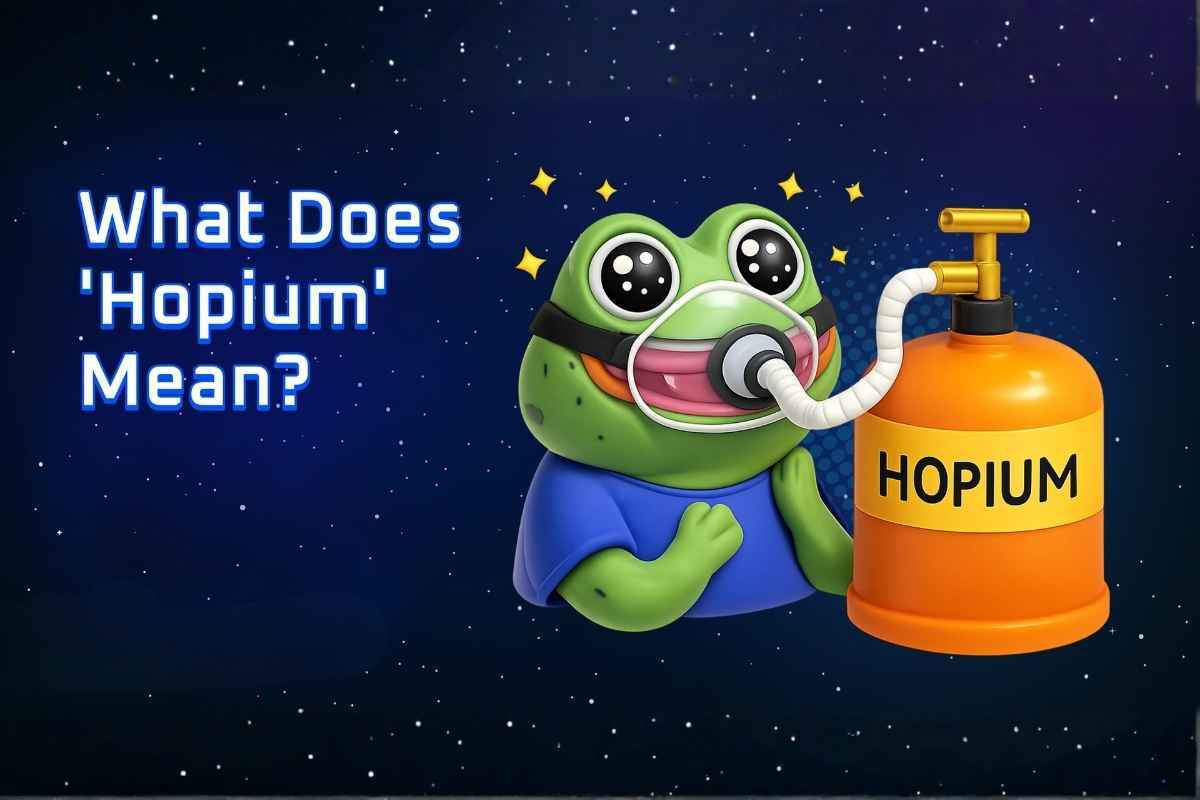
Hopium is what happens when hope gets hijacked by wishful thinking. The word blends “hope” and “opium,” and that combo isn’t accidental. Like opium, hopium feels good in the short term but clouds your judgment. It’s the belief that something good will happen despite little to no real evidence supporting it.
Think of it as hope’s reckless cousin. Regular hope motivates you to act. Hopium keeps you sitting still, waiting for a miracle.
Origins and Evolution of the Term
The word surfaced in early 2000s political commentary, mostly used to mock blind optimism around policy promises. Then crypto arrived. The 2017 Bitcoin bull run turbo-charged the term, and by 2020, it had escaped finance circles entirely. Today you’ll hear it in sports bars, political debates, and TikTok comment sections.
Here’s a quick timeline:
| Year | Milestone |
| Early 2000s | Term appears in political satire |
| 2017 | Crypto Twitter adopts it widely |
| 2020 to 2021 | Bull run cements it in mainstream slang |
| 2023 to 2024 | Mainstream media picks it up regularly |
Hopium Does Not Equal Hope
This distinction matters more than people realize. Hope is grounded. It acknowledges reality while pushing you forward. Hopium ignores reality entirely.
| Hope | Hopium |
| Based on realistic possibility | Based on wishful thinking |
| Drives action | Encourages passivity |
| Adapts to new information | Ignores contradicting evidence |
| Healthy emotional state | Potentially self-destructive |
A good analogy: hope is a compass. Hopium is a blindfold.
The Psychology Behind Hopium
Here’s the uncomfortable truth. Your brain is actually wired for hopium. Neuroscientist Tali Sharot’s research shows humans carry a natural optimism bias, consistently overestimating positive outcomes. Combine that with American cultural messaging around “never give up,” and you’ve got fertile ground for hopium to grow.
Why People Cling to Hopium
People don’t hold onto hopium because they’re foolish. They do it because letting go is painful. A few key drivers:
- Sunk cost fallacy: “I’ve already lost so much, I can’t quit now.”
- Confirmation bias: Seeking only the information that supports what you already believe.
- Identity fusion: When your self-worth ties to an outcome, objectivity flies out the window.
- Social reinforcement: Your online community keeps telling you you’re right.
The GameStop ($GME) situation in 2021 illustrated this perfectly. Retail investors held far past rational exit points not because the data supported it but because the community narrative demanded loyalty.
The Neurological Basis of False Hope
Dopamine doesn’t actually spike when you win. It spikes in anticipation. That’s the trap. The mere possibility of a good outcome floods your brain with feel-good chemicals, making hopium genuinely addictive. Repeated cycles can rewire your reward-seeking behavior, making it harder to think clearly when stakes are high.
Hopium vs Copium: Understanding the Difference
These terms get lumped together constantly. They shouldn’t be. They describe different psychological moments in the same cycle of delusion.
Copium Definition and Meaning
Copium fuses “cope” and “opium.” While hopium lives before an event, copium kicks in after things go wrong. It’s the mental drug of rationalization. It started in gaming culture around 2018 to 2020, popularized through Twitch streams where losing players invented elaborate excuses. The Pepe the Frog Copium meme became its unofficial mascot, spreading across Know Your Meme and beyond.
Key Differences Between Hopium and Copium
| Feature | Hopium | Copium |
| Timing | Before an event | After an event |
| Core emotion | Anticipation | Denial |
| Direction | Forward-looking | Backward-looking |
| Example | “This coin is about to moon” | “It only dumped because of whales” |
Best analogy here: hopium is the bet. Copium is the excuse after you lose.
Hopium in Crypto and Finance
Nowhere does hopium thrive quite like crypto markets. The volatility is extreme, the communities are passionate, and the potential gains are life-changing. That combination breeds irrational thinking almost by design.
Common Crypto Hopium Scenarios
You’ve seen these plays before:
- “This is the bottom” declared at every 20% drop
- HODLing a coin through a 90% crash because “fundamentals”
- Believing “$1 million Bitcoin” predictions with zero critical analysis
- Buying during obvious distribution phases because influencers say “accumulate”
Bitcoin’s own history offers multiple case studies. In 2018, retail investors bought throughout the entire bear market, convinced every dip was the last. Most didn’t recover for years.
Stock Market Hopium Examples
GameStop in 2021 became the defining hopium event in recent American financial history. AMC, Bed Bath and Beyond, and other meme stocks followed the same pattern. Retail investors driven by Reddit sentiment and influencer hype held positions that fundamentals never justified. The community narrative replaced actual analysis.
Must Visit: 11 Easiest Crypto to Mine: Best Profitable Coins In Feb 2026
Meme Coins and Hopium Culture
Dogecoin. Shiba Inu. Pepe Coin. These projects run almost entirely on hopium. Celebrity tweets, especially from Elon Musk, trigger buying frenzies disconnected from any underlying value. The “this time it’s different” thinking is the purest form of hopium in action. It rarely, if ever, is different.
Hopium in Social Media and Echo Chambers
Social media didn’t create hopium. It just gave it a megaphone and an algorithm.
How Social Media Amplifies Hopium
Platforms reward emotional, engaging content. Sober analysis gets scrolled past. “This coin will 100x” gets 50,000 likes. Eli Pariser’s filter bubble theory explains the rest: algorithms feed you content that confirms what you already believe, tightening the echo chamber with every click.
Reddit, Crypto Twitter, and Hopium Culture
r/WallStreetBets is basically a hopium museum. Crypto Twitter (CT) runs on price prediction threads and influencer hype cycles. What makes these spaces dangerous isn’t bad intent. It’s that community identity becomes inseparable from the trade. Selling feels like betrayal.
Influencer-Driven Hopium
Many financial influencers profit directly from audience hopium. The “NFA” disclaimer (not financial advice) provides legal cover while the content itself drives irrational behavior. Parasocial trust is powerful. People believe influencers they’ve followed for years over cold, hard data. Media literacy isn’t optional anymore. It’s essential.
Recognizing and Managing Hopium
The first step out of the hopium haze is recognizing you’re in it. That’s harder than it sounds.
Warning Signs of Hopium Thinking
Watch for these red flags in your own thinking:
- Dismissing bearish data without examining it
- Doubling down after repeated losses
- Only reading or watching content that confirms your position
- Emotional reactions to people who disagree with you
- “Just one more dip” becoming a permanent mindset
Identifying Hopium in Decision Making
Before any major financial decision, ask yourself one question: “What would change my mind?” If you can’t answer that, you’re operating on hopium. Try the pre-mortem technique. Imagine your decision failed completely. What went wrong? Working backwards from failure forces you to see risks you’d otherwise ignore.
The Role of Critical Thinking
Deliberately seek out the opposing view. If you’re bullish on an asset, spend 30 minutes reading the bear case. Structured thinking tools like the Minto Pyramid Principle can help you separate evidence from narrative before making costly decisions.
Practical Strategies for Breaking Free from Hopium
Awareness alone won’t save you. Escaping hopium requires deliberate systems.
Realistic Expectations
Anchor your goals in data, not desire. Historical stock market returns average roughly 10% annually. Not 10x. Use the 10/10/10 rule: how will this decision feel in 10 minutes, 10 months, and 10 years? Investopedia’s return guides offer solid benchmarks for realistic planning.
Emotional Resilience
Journaling your decisions and the emotions driving them is surprisingly effective. Patterns emerge fast. You’ll notice you make your worst decisions when tired, stressed, or socially pressured. Mindfulness practices, even brief ones, reduce the emotional reactivity that hopium exploits.
Accountability Systems
Pre-commit to an exit strategy before you enter any position. Write your investment thesis down. Share it with someone you trust. Use portfolio trackers and stop-loss orders to enforce discipline when emotions take over.
Professional Help and Resources
Sometimes hopium isn’t just a financial problem. It’s a psychological one. Consider reaching out to:
- NAPFA: Fee-only certified financial planners
- Financial Therapy Association: Therapists specializing in money behavior
- NAMI: Mental health support if financial stress becomes overwhelming
Seeking help isn’t weakness. It’s the smartest trade you’ll ever make.
Conclusion: Finding Balance Between Hope and Reality
Hope is not the enemy. Hopium is. The line between them is awareness, and that awareness is entirely within your reach. Understanding the definitions and meaning of hopium and copium gives you a real edge, whether in markets, relationships, or everyday decisions.
Stay curious, stay skeptical, and let real evidence, not comfortable narratives, guide your choices. That’s not pessimism. That’s just smart living.

