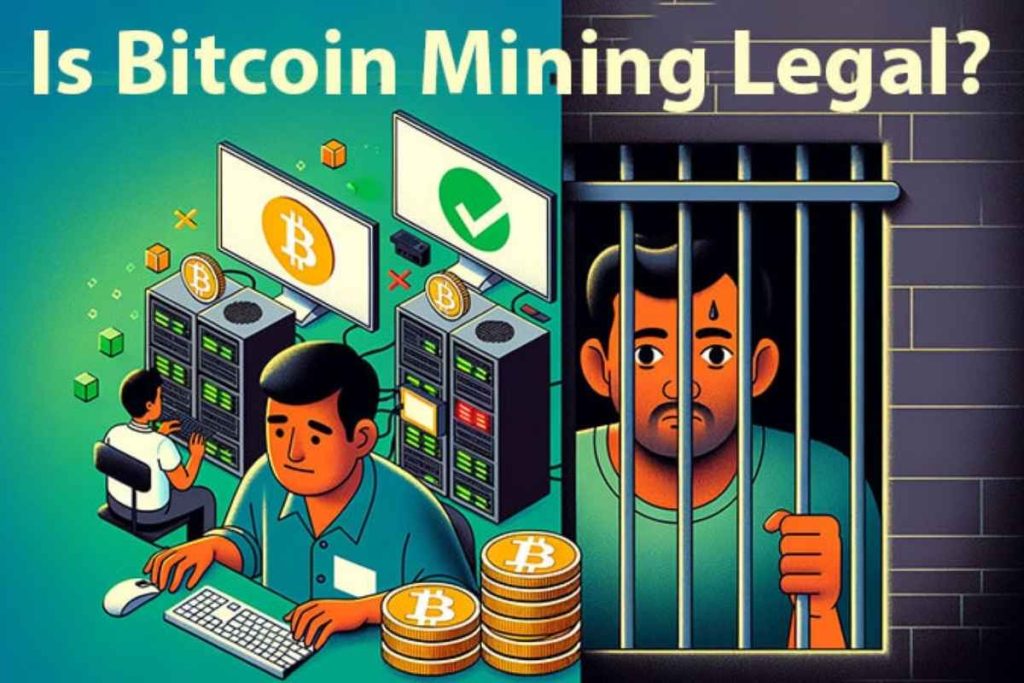
Bitcoin has changed the way the world thinks about money. But one question keeps coming up for anyone thinking about getting started: is Bitcoin mining legal? The short answer is yes, in most countries.
But the full picture is more nuanced than that. Laws vary by country, by state, and even by city. This guide breaks down everything you need to know about Bitcoin mining, how it works, and where it stands legally in 2026.
What Is Bitcoin?
Bitcoin is a decentralized digital currency that operates without a central bank or government authority. It was created in 2009 by an anonymous developer known as Satoshi Nakamoto. Unlike traditional money, Bitcoin exists only in digital form and runs on a peer-to-peer network called the blockchain.
Transactions are verified by a network of computers around the world. No single authority controls it. That is what makes it powerful and, for some governments, concerning.
How Does Bitcoin Mining Work?
Bitcoin mining is the process of verifying transactions on the Bitcoin network and adding them to the blockchain. Miners use specialized computers to solve complex mathematical puzzles. The first miner to solve the puzzle gets to add the next block to the blockchain and earns a Bitcoin reward.
A Bitcoin Transaction’s Components
When you send Bitcoin to someone, three things happen:
- The transaction is broadcast to the network.
- Miners collect the transaction and group it with others into a candidate block.
- That block is verified and added to the blockchain permanently.
Each transaction includes a sender address, a receiver address, and a digital signature that proves the sender authorized it.
The Merkle Tree and the SHA-256 Algorithm
Bitcoin uses a structure called the Merkle Tree to organize transactions within each block. Each transaction gets hashed using the SHA-256 algorithm, a cryptographic function that converts data into a fixed-length string of characters. These hashes are then paired and hashed again, forming a tree structure. The top of the tree is called the Merkle Root and is included in the block header. This makes it nearly impossible to alter any single transaction without changing the entire structure.
Why Do Bitcoins Need to Be Mined?
Bitcoin does not have a central bank to issue new coins. Mining serves two purposes: it creates new Bitcoin and it secures the network by validating transactions. Without miners, there would be no way to confirm that Bitcoin was actually sent or received.
What Is Blockchain?
A blockchain is a public, distributed ledger that records all Bitcoin transactions in order. Each block contains a group of transactions, a timestamp, and a reference to the previous block. Once added, a block cannot be changed. This creates a chain of verified, tamper-resistant records.
Solo vs. Pool Mining
Solo mining means you mine on your own and keep 100 percent of the rewards. But your chances of solving a block by yourself are very low unless you have enormous computing power.
Pool mining means joining a group of miners who combine their computing resources. Rewards are shared based on each miner’s contribution. Pool mining offers more consistent, smaller payouts. For most beginners, pool mining makes more practical sense.
Is Bitcoin Mining Legal?
Bitcoin mining is currently legal in the United States and the majority of other countries. However, the legality depends on where you live. Some nations fully support it, others regulate it heavily, and a small number have banned it outright. The key factors that determine legality include energy consumption rules, business registration requirements, environmental regulations, and tax compliance.
Is Bitcoin Mining Legal in the USA?
The US is the global capital of Bitcoin mining. There is no federal ban, and you are free to mine. But that does not mean there are no rules.
Federal Regulations
There are no federal laws explicitly prohibiting Bitcoin mining in the United States. However, federal agencies including the IRS, SEC, FinCEN, and CFTC each play a role in how crypto activity is monitored and taxed. Miners must comply with anti-money laundering rules and report income accurately.
State Regulations
State laws vary significantly. States like Montana, Mississippi, Oklahoma, and Arkansas have passed Right-to-Mine laws that protect miners and prohibit punitive regulatory practices. Texas welcomes large-scale operations with favorable energy rates. New York has imposed restrictions on new fossil-fuel-powered mining facilities, though home mining remains allowed.
Tax Implications
Bitcoin earned through mining is taxed at your regular income tax rate as gross income, assessed based on the value of Bitcoin on the date it was received. When you later sell that Bitcoin, capital gains tax applies. If you register mining as a business, you may deduct expenses like hardware, electricity, and service costs.
Is Cryptocurrency Mining Legal in India?
India has not banned mining. But the 30% tax on digital asset income, plus 1% per transaction, makes it tough. Technically legal, but practically not viable for many. The regulatory environment remains unclear, and the Reserve Bank of India has repeatedly cautioned against crypto use.
Is Bitcoin Mining Legal in Canada?
Canada allows Bitcoin mining across many regions and its cool climate helps manage heat from mining rigs. However, rules differ by province. Some provinces have paused new connections for large industrial farms to protect local energy grids. Home miners operate safely as long as they pay taxes and follow local rules.
Is Bitcoin Mining Legal in Australia?
Yes, Bitcoin mining is fully legal in Australia. Cloud mining, ASIC mining, and GPU mining are all permitted. However, cryptocurrency is not considered legal tender in Australia. Miners must report their earnings as taxable income under Australian tax law.
Is Bitcoin Mining Legal in New Zealand?
Bitcoin mining is legal in New Zealand. The Inland Revenue Department (IRD) treats crypto mining as a money-making activity, so income from mining is subject to income tax. The good news is that mining-related expenses can be deducted from your taxable earnings.
Is Bitcoin Mining Legal in the UK (United Kingdom)?
Crypto is legal in the UK, but service providers must be licensed and follow UK financial rules. Under the Financial Services and Markets Act in October 2023, the UK established new rules on legalizing cryptocurrency. The Financial Conduct Authority (FCA) classifies Bitcoin as an exchange token. Mining income and capital gains are both taxable under HMRC rules.
List of Countries Where Bitcoin (BTC) Mining Is Illegal
China, Bangladesh, Nepal, Algeria, Morocco, and Egypt maintain comprehensive mining bans. Other nations that restrict or heavily limit mining include Bolivia, Ecuador, and parts of the Middle East. Reasons vary from energy shortages and capital flight concerns to financial sovereignty issues.
| Country | Status |
| China | Fully banned since 2021 |
| Nepal | Criminal offense |
| Algeria | Fully banned |
| Bangladesh | Fully banned |
| Morocco | Fully banned |
| Bolivia | Restricted |
From Zero to Crypto Hero
Starting Bitcoin mining from scratch can feel overwhelming, but the process is straightforward once you understand the basics. You need the right hardware, software, and a strategy. Most beginners start with a mining pool, a mid-range ASIC miner, and free mining software.
Learn the fundamentals first: how the blockchain works, what mining difficulty means, and how rewards are calculated. Then, check your local laws, set up your equipment, and start small.
Must Read: Be1Crypto.com Blockchain: Fast and Helpful Learning Guide
Can Bitcoin Mining Be Traced?
Yes, Bitcoin mining can be traced. Every transaction on the Bitcoin blockchain is publicly visible. Mining activity, wallet addresses, and block rewards are all recorded on the public ledger. Regulatory agencies can and do trace Bitcoin flows. Using Bitcoin for illegal activity is not a hidden act, even if your real identity is not immediately attached to a wallet address.
What You Need to Start Mining Bitcoin
Mining Hardware
The most common and efficient hardware is an ASIC (Application-Specific Integrated Circuit) miner. Popular models include Bitmain Antminer and MicroBT Whatsminer series. GPU mining is less efficient for Bitcoin but still used for other cryptocurrencies. Hardware costs can range from a few hundred to several thousand dollars.
Bitcoin Mining Software
Mining software connects your hardware to the Bitcoin network or mining pool. Popular options include CGMiner, BFGMiner, and NiceHash. Most software is free. The software monitors your hash rate, temperature, and earnings in real time.
Mining Pools
Mining pools allow you to combine computing power with other miners for more consistent rewards. Well-known pools include Foundry USA, AntPool, F2Pool, and ViaBTC. Fees typically range from 1 to 3 percent of earnings.
What are the Risks of Bitcoin Mining?
Bitcoin mining comes with real risks that beginners often overlook:
- High upfront hardware costs that may take months to recover.
- Electricity bills that can quickly exceed mining income.
- Bitcoin price volatility that directly affects profitability.
- Regulatory changes that could restrict or ban operations.
- Hardware becoming obsolete quickly as newer models launch.
- Environmental concerns leading to tighter regulations in some regions.
Is Bitcoin Mining Profitable?
Profitability depends on several factors: your hardware efficiency, local electricity costs, Bitcoin’s current price, and network difficulty. In regions with cheap power like Texas, Kazakhstan, or Iceland, mining can be very profitable. In areas with expensive electricity, it can be a losing proposition.
How Much Do Miners Earn From Bitcoin Mining?
As of 2025, miners earn 3.125 BTC per block plus transaction fees. At current Bitcoin prices, that reward is worth a substantial amount. However, difficulty means only the miner who solves the puzzle first claims the reward. Pool miners share smaller, more frequent payouts.
Bitcoin Halving
Bitcoin halving is an event that cuts the block reward in half approximately every four years. The most recent halving occurred in April 2024, reducing the reward from 6.25 BTC to 3.125 BTC. The next halving is expected around 2028. Halving reduces the rate of new Bitcoin creation and historically has been followed by an increase in Bitcoin’s price.
Why Does Mining Use So Much Electricity?
Mining requires computers to run billions of calculations per second trying to find the correct hash. This is by design. The proof-of-work mechanism requires real energy expenditure to make the network secure. The more miners participate, the harder the puzzle gets, and the more electricity is consumed collectively.
FAQs
Is it legal to mine Bitcoin at home?
Yes, in most countries including the US, UK, Canada, and Australia, home mining is legal as long as you report income and follow local energy rules.
Do I need a license to mine Bitcoin?
Most countries only require licenses for large-scale commercial operations. Small home miners generally do not need one.
Is Bitcoin mining taxable?
Yes, mined Bitcoin is treated as ordinary income in most countries, taxed at its value on the day it was received.
Can Bitcoin mining damage my electricity bill?
Yes, ASIC miners consume significant power. Running one continuously can noticeably raise your monthly electricity costs.
Which country is best for Bitcoin mining?
The USA (especially Texas), Canada, Iceland, and Paraguay are among the most mining-friendly countries due to cheap or renewable energy and clear legal frameworks.
Conclusion
Bitcoin mining is legal in most parts of the world, but the rules are getting tighter each year. Whether you are a home miner or planning a large operation, understanding your local laws is the first step.
Pay your taxes, follow energy regulations, and register your business where required. Profitability is possible, but it requires careful planning. Always consult a qualified tax or legal professional before starting, as regulations can change quickly.