
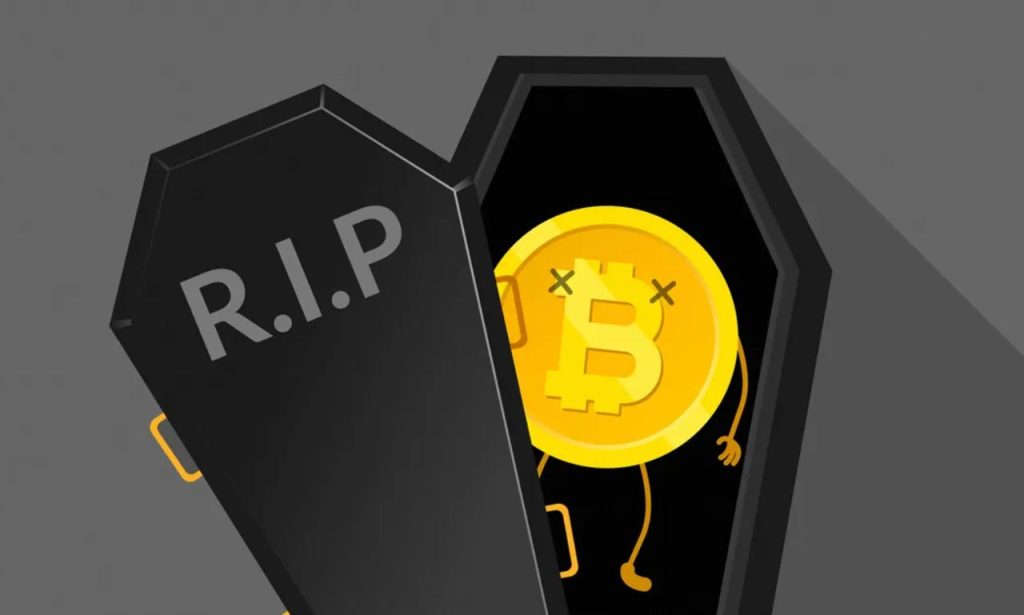
The world of digital finance is changing fast, and many people are asking: is crypto dead? While market volatility often causes investors to panic, the underlying blockchain technology remains incredibly strong. Large financial institutions are still adopting digital assets like Bitcoin and Ethereum for long-term growth. This decentralized ecosystem continues to evolve, proving that the current price correction is just a natural part of the cycle.
Are we witnessing a final market crash, or is this the perfect entry point? History shows that bear markets are where the real wealth is built by those who understand tokenomics. When sentiment hits rock bottom, smart money begins to accumulate liquidity quietly. Don’t let the fear index distract you from the massive institutional adoption happening right now.
The future of finance is being rewritten through smart contracts and Web3 innovation. Even during a downturn, developers are building decentralized applications that offer real utility. As regulatory clarity improves, the crypto market will likely emerge more resilient and transparent than ever before for global users.
The Buzz Around Crypto’s Decline
Whenever the market capitalization of the broader sector takes a significant dip, headlines across the globe immediately scream that the end is near. This “buzz” is often fueled by investor sentiment shifting from extreme greed to extreme fear. In 2026, the noise around crypto’s decline usually stems from the cooling of “meme coin” manias and the collapse of unsustainable yield farming protocols.
However, looking at the on-chain data, we see a different story. While the retail “hype” might fade during a bear market, the developer activity remains at an all-time high. Large-scale financial institutions are no longer asking if they should get involved; they are actively building on Ethereum and Polygon. The perceived decline is often just a transition from a speculative phase to a utility-driven phase, where the “get rich quick” crowd leaves and the builders stay to refine the user experience.
What Does “Dead” Mean in the Crypto World?
In the context of digital finance, “dead” is a subjective term. For a day trader, a 50% drop in Bitcoin’s price might feel like a terminal blow. For a software engineer, the technology is only “dead” if the nodes stop running and the distributed ledger ceases to record transactions. To truly understand this, we must define the different layers of the ecosystem:
- Price Death: When an asset loses 90% of its value and fails to recover (often seen in low-cap altcoins).
- Project Death: When the founding team abandons the GitHub repository and development stops.
- Network Death: When the hash rate drops so low that the network becomes vulnerable to a 51% attack.
In 2026, none of these “death” indicators apply to the major players. Even during periods of low trading volume, the total value locked (TVL) in DeFi protocols remains significant, indicating that users are still trusting the code with their capital.
Historical Crypto Crashes vs. Current Trends
The history of this industry is a series of “deaths” followed by resurrections. We have seen major crashes in 2014, 2018, and 2022. Each time, critics claimed the bubble had finally burst for good. In 2026, the current trends differ from historical crashes due to the presence of Institutional Adoption.
In previous cycles, the market was almost entirely driven by retail investors using high leverage. Today, the market is anchored by Spot ETFs and corporate balance sheets. This institutional floor prevents the “total wipeout” scenarios of the past. Additionally, the correlation between crypto and traditional tech stocks (like the Nasdaq) has tightened, meaning crypto is now treated as a high-growth tech asset rather than a disconnected digital anomaly.
Market Indicators Signaling Trouble
While the industry is resilient, we cannot ignore the warning signs that suggest market volatility will continue. Professional analysts in 2026 look at specific market indicators to gauge the health of the ecosystem. If these metrics trend downward simultaneously, it suggests a prolonged “crypto winter.”
- Stablecoin Outflows: If the supply of USDC or USDT on exchanges drops, it means there is less “dry powder” to buy the dip.
- Active Addresses: A decline in unique wallets interacting with smart contracts indicates a loss of user adoption.
- Funding Rates: Persistently negative funding rates in the perpetuals market suggest that traders are overwhelmingly betting on further price drops.
| Indicator | Status in 2026 | Market Sentiment |
| Hash Rate | All-time High | Bullish (Network Security) |
| Exchange Reserves | Decreasing | Bullish (Long-term Holding) |
| Regulatory Fines | Increasing | Neutral (Market Cleaning) |
The data in this table shows that while regulatory pressure is high, the fundamental security of the networks (Hash Rate) has never been stronger. This suggests that the “trouble” is more about legal compliance than technical failure.
Regulatory Pressures and Their Impact
The year 2026 has been a turning point for Regulatory Clarity. For years, the lack of a legal framework was a double-edged sword: it allowed for rapid innovation but also for massive fraud. With the full implementation of the MiCA framework in Europe and similar guidelines from the SEC and CFTC in the US, the “Wild West” era is officially over.
These regulatory pressures have forced many offshore exchanges to implement strict KYC (Know Your Customer) and AML (Anti-Money Laundering) protocols. While this has slowed down the anonymous nature of some transactions, it has opened the doors for pension funds and insurance companies to enter the space. Regulation hasn’t killed crypto; it has simply changed the rules of engagement to favor transparency and consumer protection.
The Role of Blockchain Technology Beyond Coins
One of the biggest arguments against the “is crypto dead” narrative is the explosion of blockchain technology in non-financial sectors. In 2026, the technology is being used for far more than just “coins.”
Supply Chain Management has been revolutionized by using NFTs to track the provenance of luxury goods and pharmaceuticals. Meanwhile, Decentralized Identity (DID) solutions allow users to own their personal data without relying on giant tech corporations. We are also seeing the rise of Web3 social media platforms where creators own their content and their audience, immune to arbitrary censorship from central authorities. These applications provide intrinsic value that is completely independent of the price of Bitcoin.
Investor Sentiment: Are People Losing Faith?
It is easy to lose faith when your portfolio is in the red. However, surveys in 2026 show that the “average” investor has become more sophisticated. People are moving away from speculative shitcoins and toward “Blue Chip” assets like Ethereum and Solana.
The Fear and Greed Index still fluctuates wildly, but the long-term sentiment remains optimistic. This is because the “belief system” has shifted. In the past, people bought crypto to “get rich.” Now, many buy it as a hedge against inflation and a way to access permissionless financial services. As long as central banks continue to devalue fiat currencies, the appetite for a deflationary digital alternative will exist.
Success Stories Despite Market Downturns
Even during the most brutal “winters,” there are success stories that highlight the industry’s potential. In 2026, we have seen the successful launch of CBDCs (Central Bank Digital Currencies) built on private versions of public blockchains. We have also seen decentralized autonomous organizations (DAOs) successfully crowdfund and manage large-scale real-world infrastructure projects.
A notable example is the growth of Layer 2 networks like Base. Developed by Coinbase, it has brought millions of mainstream users into the on-chain economy without them even realizing they are using blockchain. These success stories prove that when the tech is hidden behind a simple interface, mass adoption follows naturally, regardless of market conditions.
Will Crypto Ever Fully Die? Experts Weigh In
The consensus among technology experts and economists in 2026 is that crypto cannot “fully die” because it has become a global infrastructure. Just as the “internet bubble” of 2000 didn’t kill the internet, the various “crypto bubbles” have only served to wash out the weak projects.
Experts point to the network effect as the primary reason for its permanence. With over 500 million users worldwide, the system is too large to fail entirely. Even if every government banned it today, the decentralized nature of the protocol ensures it would continue to exist in a peer-to-peer capacity. The verdict is clear: the speculative “fad” might die, but the digital asset class is a permanent evolution of money.
Conclusion
Looking toward the future, the evidence suggests that the era of questioning whether is crypto dead has been replaced by an era of integration. While market cycles will always bring periods of volatility and price corrections, the institutional foundations laid by spot ETFs and regulatory clarity provide a permanent floor for the industry. The shift from speculative “get-rich-quick” schemes to utility-driven applications—such as RWA tokenization and decentralized physical infrastructure—proves that the technology has matured far beyond its initial limitations.
In conclusion, the survival of the digital asset ecosystem is no longer tied to the hype of retail traders but to the essential role it plays in the modern global financial system. As we move through 2026, the focus has shifted toward building a more transparent, efficient, and decentralized internet. Those who recognize the long-term value of blockchain technology understand that these “market deaths” are merely necessary phases of evolution, clearing out the noise to make room for the next generation of financial innovation.

