
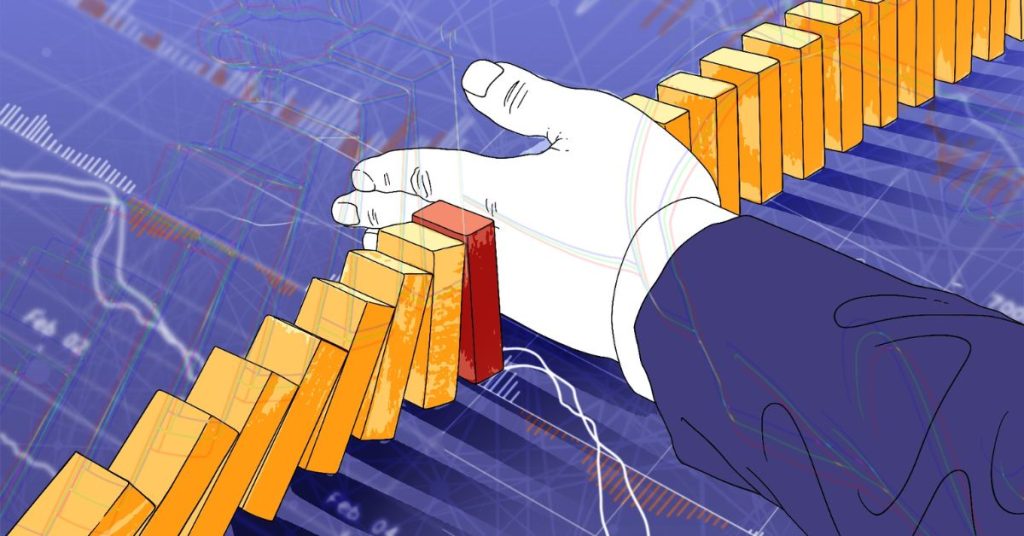
Cryptocurrency markets can create significant opportunities, but sharp price swings, leverage, liquidity issues, security threats, and emotional decisions can quickly turn a promising position into a major loss. Crypto risk management provides a structured way to control these risks before they affect your capital. It involves setting a realistic total crypto allocation, defining a risk budget, applying disciplined position sizing, and establishing clear loss limits. Traders also need to understand stop-loss orders, slippage, liquidation risk, margin requirements, and market execution. Investors must consider diversification, custody, wallet security, counterparty exposure, and smart-contract risks. A well-designed risk framework focuses on capital preservation, helping you stay disciplined through volatile conditions without exposing your entire portfolio to one market event.
Crypto Risk-Control Layers
Crypto risk should be managed through several connected layers because no single rule can protect against every possible failure.
A comprehensive framework can include:
- Portfolio controls: Establish a total crypto allocation that matches your financial circumstances and risk tolerance.
- Position controls: Use position sizing and exposure caps to prevent individual assets from becoming excessively large.
- Trade controls: Define the entry price, stop-loss distance, and profit-taking plan before opening a position.
- Leverage controls: Limit leverage and maintain a suitable liquidation buffer.
- Execution controls: Consider slippage, bid-ask spread, trading fees, order-book depth, and token liquidity.
- Custody controls: Protect private keys, recovery phrases, wallets, and transaction approvals.
- Operational controls: Prepare for exchange outages, withdrawal restrictions, smart-contract problems, and cross-chain bridge failures.
- Behavioural controls: Use cooling-off rules and a trading circuit breaker after predetermined losses.
This layered model is important because each risk requires a different response. A trader might calculate position sizing correctly but still suffer an unexpectedly large loss because of leverage or slippage. Likewise, an investor may have excellent diversification but lose assets through poor wallet security.
Risk management should therefore be treated as a system rather than a single stop-loss setting.
Crypto Risk Now Goes Beyond Price Volatility
Price volatility is one of the most visible crypto risks, but it is not the only one. Investors and traders also face technological, operational, liquidity, custody, counterparty, and behavioural risks.
For example, a person using a centralized exchange has counterparty risk because assets depend partly on the exchange’s operations. A person using self-custody assumes greater responsibility for wallet security and transaction verification. A futures trader adds leverage, margin, funding costs, and the possibility of perpetual-futures liquidations.
Other risks include:
- Stablecoin concentration
- Malicious wallet approvals
- Address poisoning
- AI-assisted impersonation scams
- Exchange failures
- Smart-contract risk
- Cross-chain bridge failures
- Thin order books
- Token liquidity problems
- Correlated open positions
- Overnight/weekend exposure
- Behavioural risk
Diversification also needs careful interpretation. Owning many tokens does not automatically create a diversified portfolio. If several assets respond to the same market conditions, they can decline together. This creates diversification / concentration risk.
A portfolio holding ten highly correlated cryptocurrencies may therefore be less diversified than it appears.
The same principle applies to trading. Five separate positions can effectively become one large risk if they all depend on the same market trend.
Disclaimer
Cryptocurrency and digital-asset markets can involve significant losses, rapid price movements, limited liquidity, leverage-related risks, and operational failures. The examples in this article are educational illustrations and are not personalized financial, investment, tax, legal, or trading advice.
A risk percentage that is appropriate for one person may be unsuitable for another. Always consider your financial circumstances, investment horizon, liquidity needs, and risk tolerance before making decisions.
Disclosure
The figures and examples in this article, including the illustrative 1% risk per trade and $10,000 trading account, are simplified examples used to explain risk-management concepts. Actual results can differ because of trading fees, slippage, market volatility, liquidity, execution conditions, exchange rules, and other factors.
Build Your Risk Budget Before You Buy or Trade
Effective risk management begins before entering the market. Instead of deciding how much cryptocurrency you want to buy and worrying about risk later, determine the amount of loss you can reasonably accept first.
Your risk budget is the amount of financial risk you deliberately allow yourself to take. It is not necessarily the same as your crypto investment amount.
For example, someone could allocate $10,000 to cryptocurrency but decide that only a smaller portion of that capital should be used for active trading.
Three concepts should be kept separate:
- Capital allocation: How much money is committed to crypto.
- Risk budget: How much potential loss is acceptable.
- Position sizing: How much capital is placed into each position.
When these three elements work together, the portfolio becomes easier to control.
Set Your Total Crypto Allocation
Your total crypto allocation should reflect your financial situation, risk tolerance, investment horizon, and ability to withstand losses.
Money needed for rent, bills, education, healthcare, debt payments, or other essential expenses should not automatically be considered speculative capital. Maintaining an emergency fund can help prevent investors from being forced to sell volatile assets during unfavorable market conditions.
A sensible planning structure can separate capital into different purposes:
- Essential cash and emergency reserves.
- Long-term investments.
- A defined cryptocurrency allocation.
- Capital reserved for active trading.
- A limited experimental allocation, where appropriate.
Within cryptocurrency, the allocation should also be divided according to risk.
For example, a portfolio could have separate limits for major assets, established networks, speculative altcoins, stablecoins, and high-risk tokens. The exact percentages should depend on individual circumstances rather than being treated as universal rules.
Exposure caps can prevent a single asset from becoming too large. They can also limit exposure to a particular sector, blockchain ecosystem, or token category.
Rebalancing rules can then help return the portfolio toward its intended structure when market movements cause one holding to become disproportionately large.
Define Non-Negotiable Loss Limits
A risk plan becomes much more useful when it contains rules that cannot easily be changed during emotional market conditions.
Loss limits can be established at several levels:
- Maximum loss per trade
- Maximum daily trading loss
- Maximum weekly loss
- Maximum portfolio drawdown
- Maximum leveraged exposure
- Maximum exposure to one asset
- Maximum exposure to correlated positions
A drawdown limit determines how much an account can decline from its previous peak before trading activity is reduced or stopped.
For example, a trader might establish a maximum daily loss and stop opening new positions once that threshold is reached.
A trading circuit breaker can make this process even more disciplined. Once a predetermined loss level is reached, the trader stops trading and enters a cooling-off period.
Cooling-off rules are especially useful after a sequence of losing trades. Without them, behavioural risk can lead to revenge trading, excessive leverage, larger position sizes, or repeated attempts to recover losses immediately.
The purpose of a loss limit is not to guarantee profitability. It is to prevent a normal losing period from becoming a catastrophic one.
Illustrative Risk-Budget Worksheet
Consider a hypothetical trader with $10,000 in dedicated trading capital:
| Risk Control | Illustrative Amount |
| Trading capital | $10,000 |
| Risk per trade | 1% |
| Maximum planned loss per trade | $100 |
| Daily loss limit | $200 |
| Maximum portfolio heat | $400 |
| Trading circuit breaker | $500 |
| Emergency fund | Separate from trading capital |
Here, portfolio heat represents the approximate amount of capital currently at risk across open positions if the planned stops are reached.
If four trades each carry $100 of planned risk, the portfolio heat is approximately $400. This does not mean the actual maximum loss is guaranteed to be $400 because slippage, gaps, fees, liquidity problems, and execution issues can increase losses.
The 1% figure is simply an illustrative risk-control example, not a universal standard.
Use Different Rules for Investors and Traders
Long-term investors and active traders have different objectives and therefore require different risk-management systems.
Long-term investors generally need to focus on:
- Total crypto allocation
- Investment horizon
- Diversification
- Concentration risk
- Custody
- Wallet security
- Stablecoin concentration
- Rebalancing rules
- Emergency liquidity
Active traders typically need additional controls for:
- Position sizing
- Stop-loss distance
- Leverage
- Margin
- Portfolio heat
- Daily drawdown limits
- Trading fees
- Slippage
- Bid-ask spread
- Execution risk
- Overnight/weekend exposure
A long-term investor may tolerate temporary price declines because the investment thesis is based on a multi-year horizon. A short-term trader, however, may need to exit quickly when a specific setup becomes invalid.
Read More : Bitcoin Wallet vs Exchange: Which Should You Choose
The same cryptocurrency can therefore require different risk rules depending on why it is being held.
Position Sizing: Decide the Loss Before the Trade
Position sizing determines how much capital is exposed to a particular trade.
One common mistake is deciding how much cryptocurrency to buy first and only afterward considering where the stop-loss should be placed.
A more disciplined process works in reverse:
- Determine the maximum acceptable loss.
- Identify the price level where the trade becomes invalid.
- Calculate the stop-loss distance.
- Determine the token quantity.
- Check liquidity and execution conditions.
- Adjust the position if necessary.
- Enter only if the expected risk remains acceptable.
This process connects the trade size to the amount that can actually be lost.
How to Calculate a Crypto Position Size
A simplified position-sizing formula is:
Position Size = Maximum Acceptable Loss ÷ Stop-Loss Distance
Suppose a trader has a $10,000 account and chooses an illustrative 1% risk per trade.
The maximum planned loss would be:
$10,000 × 1% = $100
Assume the entry price is $100 and the planned stop-loss is $95.
The stop-loss distance is:
$100 − $95 = $5
The estimated token quantity is:
$100 ÷ $5 = 20 tokens
The approximate position value would therefore be:
20 × $100 = $2,000
If the stop is executed at $95, the price-based loss would be approximately $100 before trading fees and execution differences.
This example shows why position sizing is so important.
If the stop-loss distance becomes larger, the token quantity should generally become smaller when the trader wants to maintain the same dollar risk.
For example, if the stop were $10 away instead of $5, the same $100 risk budget would support approximately 10 tokens rather than 20.
The formula is simple, but actual trading conditions can make the result more complicated.
Adjust Position Size for Real Trading Conditions
Mathematical position sizing assumes that the trade will execute exactly as planned. Real markets may behave differently.
Slippage can cause the final execution price to differ from the expected price. A wide bid-ask spread can increase the cost of entering or exiting. Thin order books can make larger trades difficult to execute without moving the market.
Before entering a position, consider:
- Token liquidity
- Trading volume
- Bid-ask spread
- Order-book depth
- Expected slippage
- Trading fees
- Funding costs
- Market volatility
- Correlated open positions
- Overnight/weekend exposure
Liquidity is especially important for smaller tokens. A position that appears appropriately sized based on the chart may become difficult to exit when market depth disappears.
The same principle applies to portfolio risk. Several individual trades may each appear small, but correlated open positions can create substantial combined exposure.
A trader should therefore monitor both individual trade risk and total portfolio heat.
Simple Estimate Versus Realistic Estimate
| Risk Factor | Simple Estimate | Realistic Assessment |
| Entry price | Exact planned price | Possible average execution price |
| Stop-loss | Exact stop level | Stop plus potential slippage |
| Token quantity | Formula result | Adjusted for liquidity |
| Trading cost | Ignored | Fees and spread included |
| Market conditions | Stable assumption | Current volatility considered |
| Correlation | Individual trade | Combined exposure evaluated |
| Execution | Assumed | Partial fills and slippage considered |
.
Stop-Loss and Take-Profit Orders: Plan the Exit Before the Entry
A stop-loss should be part of the original trade plan rather than an emergency reaction after the position starts losing money.
The stop should have a logical connection to the trading setup. For example, a technical trader may place a stop beyond a level that would invalidate the original market thesis.
The distance between the entry price and stop-loss then determines the position size.
A wider stop generally requires a smaller position if the maximum dollar loss remains unchanged.
A profit-taking plan is also useful. Before entering, a trader can determine whether profits will be taken at one target, several targets, or through a trailing approach.
Planning the exit in advance reduces the need to make important decisions while experiencing fear or greed.
Stop-Market vs Stop-Limit Orders
A stop-market order is designed to prioritize execution after its trigger condition is reached. Once activated, it generally becomes a market order. However, the final execution price can differ from the trigger price during fast or illiquid conditions.
A stop-limit order converts into a limit order after its trigger condition is reached. This provides greater control over the minimum or maximum execution price, depending on the order structure, but it also creates a risk of non-execution.
Consider the basic trade-off:
| Order Type | Main Benefit | Main Risk |
| Stop-market | Prioritizes execution | Final price may differ from trigger |
| Stop-limit | Greater price control | May not execute |
| Limit order | Price control | May remain unfilled |
| Market order | Execution priority | Price uncertainty and slippage |
Mark Price, Last Price, and Index Price
Derivatives traders need to understand the difference between mark prices, last prices, and index prices.
The last price generally refers to the latest executed trade price on a particular exchange.
The index price is generally calculated from prices collected from a broader group of market sources and is intended to represent a reference market value.
The mark price is an exchange-defined reference price used in derivatives systems and may be important for calculating unrealized profit and loss or determining liquidation conditions.
These prices can differ temporarily.
This distinction is particularly important when trading perpetual futures. A trader may see one price on the trading screen while the platform uses another reference price for liquidation calculations.
Leverage makes this even more important.
A trader should maintain a reasonable liquidation buffer instead of placing a position so close to liquidation that ordinary market volatility could trigger a forced exit.
Isolated margin and cross margin also affect how risk is contained.
Isolated margin generally assigns specific margin to an individual position, limiting the amount of collateral associated with that position according to the platform’s rules.
Cross margin can allow multiple positions to share available account collateral. This can provide greater flexibility but can also expose more of the account when several positions move against the trader.
High leverage can turn relatively small market movements into significant account losses. Perpetual-futures liquidations can happen rapidly during sharp market movements.
A stop-loss should therefore not be viewed as a replacement for appropriate leverage and margin management.
Exchange, Wallet, and Operational Risk
Crypto risk management does not stop with market prices. An investor can correctly predict an asset’s direction and still lose money because of custody, security, operational, or counterparty problems.
Counterparty risk exists when assets depend on another organization or service. Centralized exchanges, custodians, lenders, and other intermediaries can introduce risks that do not appear on a price chart.
Self-custody removes some intermediary risks but introduces greater personal responsibility.
Read More : Bitcoin Transaction Explained Simply: How It Works
Strong wallet security is essential because blockchain transactions are generally difficult or impossible to reverse once confirmed.
Important threats include:
- Malicious wallet approvals: A user may approve a harmful smart contract that gains permission to interact with assets.
- Address poisoning: Attackers can create addresses that resemble previously used addresses in an attempt to trick users into sending funds to the wrong destination.
- AI-assisted impersonation scams: Fraudsters can use AI-generated voices, images, messages, or identities to make scams appear more convincing.
- Smart-contract risk: A decentralized application may contain coding vulnerabilities or unexpected functions.
- Cross-chain bridge failures: Moving assets between blockchain networks can introduce additional technical and security dependencies.
- Stablecoin concentration: Holding most liquid crypto value in one stablecoin can increase exposure to a single issuer, reserve system, or de-pegging event.
A basic wallet-security process can include:
- Verify addresses independently before sending funds.
- Avoid approving unfamiliar smart contracts.
- Review token approvals periodically.
- Keep recovery phrases offline and protected.
- Separate long-term holdings from experimental applications.
- Use additional security controls for significant holdings.
- Test unfamiliar transactions with small amounts first.
Exchange risk requires a similar level of attention.
Before keeping significant capital on a platform, understand its withdrawal procedures, account-security controls, asset policies, margin rules, and operational limitations.
A circuit breaker can also apply to operational problems. If an exchange experiences unusual behavior, a wallet displays unexplained approvals, or a blockchain experiences a major disruption, stopping new transactions can prevent a manageable concern from becoming a larger loss.
Finally, maintain clear rebalancing rules. A successful asset can gradually become an oversized part of a portfolio if no limits are maintained.
The goal of risk Management is not to eliminate every possible loss. That is impossible in a market as complex as cryptocurrency. The goal is to keep individual mistakes, market shocks, security incidents, and operational failures within survivable boundaries.
Frequently Asked Questions
What is crypto risk management?
Crypto risk management is a structured process for controlling potential losses from market volatility, leverage, liquidity problems, security threats, custody failures, counterparty issues, and poor trading decisions. It includes allocation limits, position sizing, stop-loss planning, diversification, and security procedures.
Is 1% risk per trade a universal rule?
No. The 1% figure is an illustrative risk-management example rather than a universal requirement. Appropriate risk depends on account size, trading strategy, financial circumstances, experience, market conditions, and risk tolerance.
What does portfolio heat mean?
Portfolio heat represents the approximate amount of capital currently exposed to loss across open trades based on their planned stop levels. For example, four positions with $100 of planned risk each create approximately $400 of portfolio heat before fees, slippage, gaps, and other execution factors.
How does leverage increase crypto risk?
Leverage increases market exposure relative to the amount of capital used as margin. This means relatively small price movements can produce larger gains or losses. Excessive leverage can also move a position closer to liquidation, reducing the amount of market movement the trader can tolerate.
What is the difference between isolated margin and cross margin?
Isolated margin generally separates the margin assigned to an individual position. Cross margin can allow available account collateral to support multiple positions. Exact mechanics vary by platform, so traders should understand the exchange’s specific margin and liquidation rules.
Should long-term crypto investors use stop-loss orders?
Not necessarily. Stop-loss orders are more commonly associated with active trading, while long-term investors may rely more heavily on allocation limits, diversification, investment horizons, custody controls, and rebalancing rules. The appropriate approach depends on the investment strategy.
Why are slippage and liquidity important?
Slippage occurs when the actual execution price differs from the expected price. Low liquidity, thin order books, large orders, and rapid market movements can increase this difference. This means a planned stop-loss does not always equal the final loss amount.
What is a common crypto risk-management mistake?
A major mistake is focusing only on price volatility. Investors can also face leverage risk, concentration risk, counterparty risk, smart-contract risk, wallet-security threats, scams, liquidity problems, and behavioural risk.
How can concentration risk be reduced?
Use exposure caps, diversify thoughtfully, monitor correlated open positions, and avoid assuming that owning many tokens automatically creates diversification. Assets that respond similarly to market conditions can still create substantial concentration risk.
What is a liquidation buffer?
A liquidation buffer is the distance between the current position and the price or condition that would cause forced liquidation. A larger buffer generally provides more room for normal market fluctuations, while excessive leverage can make the buffer dangerously small.
Final words
Crypto risk management is about protecting capital while participating in a highly volatile and unpredictable market. The article explains how traders and investors can create a practical risk budget, set a total crypto allocation, establish loss limits, control portfolio heat, and use position sizing before entering trades. It also covers stop-market and stop-limit orders, stop-loss distance, leverage, margin types, liquidation buffers, slippage, liquidity, and execution risk. These measures help prevent individual trades or sudden market movements from causing disproportionate losses.
Effective risk management also extends beyond price volatility. Wallet security, custody, counterparty risk, smart-contract vulnerabilities, stablecoin concentration, bridge failures, scams, and behavioural risk require separate controls. Diversification, exposure caps, rebalancing rules, emergency funds, and trading circuit breakers can further strengthen portfolio protection. The central principle is capital preservation: define acceptable risks in advance, follow consistent rules, and avoid allowing one mistake or market event to threaten the entire portfolio.

